


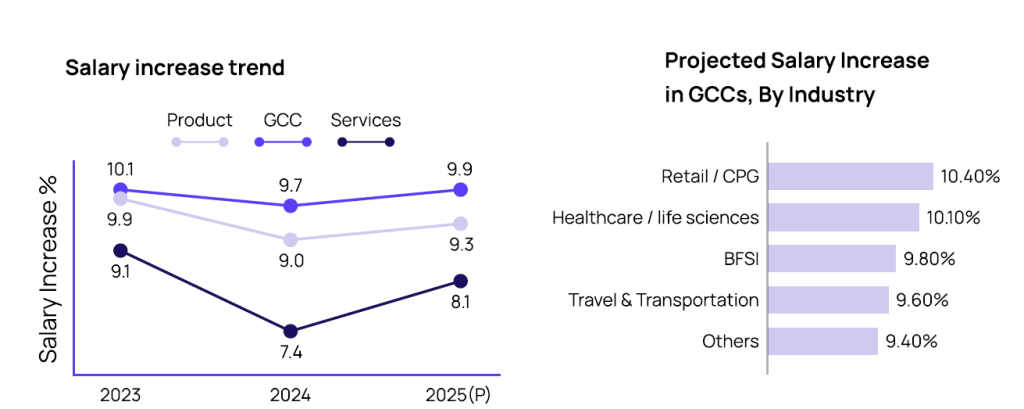
For years, Global Capability Centres (GCCs) in India relied on compensation as their sharpest tool to attract and retain top talent. But in 2025, the script is changing despite projected double-digit salary hikes, averaging 9.9% across GCCs, with sectors like Retail/CPG and Healthcare crossing 10.4%. Pay hikes are no longer the finish line. They are just the starting point.
As per this report by Talent500, the real advantage lies in how companies align compensation with purpose, career growth, and personalised experiences. This isn’t just a shift, it is a complete rewrite of the rewards playbook.
"This year’s Compensation and Benefits Survey goes beyond the numbers to explore how GCCs are rethinking their people strategies — building teams that are ready for today and prepared for what’s ahead. In a world shaped by AI, shifting expectations, and rapid change, the GCCs that succeed will be the ones that treat talent as a true strategic advantage — combining agility, purpose, and a focus on future-ready leadership.”
Vikram Ahuja, Co-Founder, ANSR, and CEO, 1Wrk
The Attrition Reality: Pay Alone Won't Stop the Exit
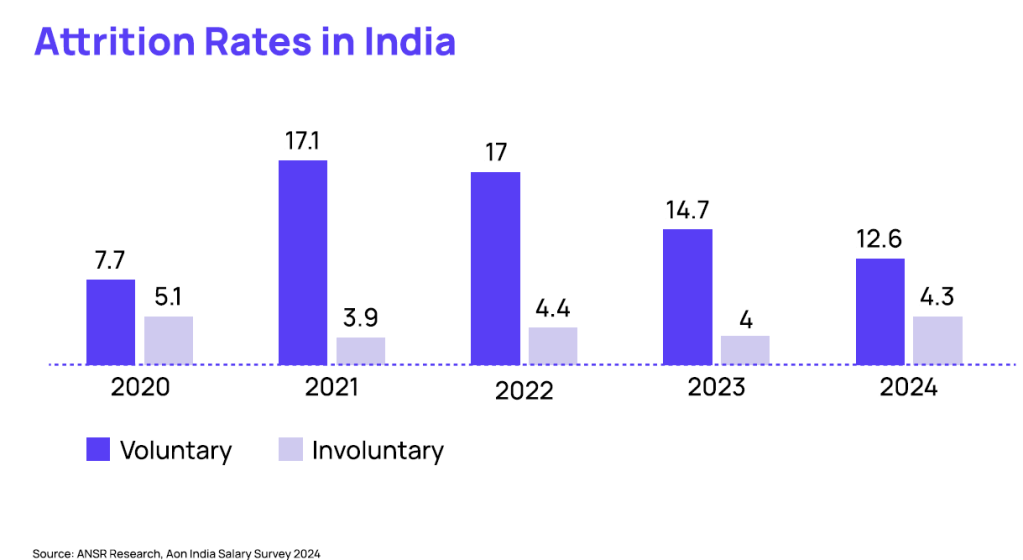
Even with pay hikes, attrition remains a critical concern. According to the Talent500 report, involuntary attrition has dropped from over 21% during the post-pandemic peak to 16.9% in 2024, with voluntary attrition hitting a low of 12.6%—a positive sign, but not a full fix.
What’s driving employees to leave?
-
External inequity in compensation
-
Limited career growth
-
Personal priorities (family, burnout, flexibility)
-
Internal pay gaps
-
Role stagnation
-
Unengaging work content
The best-performing GCCs are taking a design-led approach to retention, with strategies such as:
-
Robust internal mobility programs to avoid stagnation.
-
Real-time manager feedback and coaching to boost engagement.
-
Purpose and recognition are woven into the daily employee experience.
-
Flexible policies that support work-life integration and well-being.
-
Transparent and fair compensation structures that build long-term trust.
As the report highlights, retention today is not reactive but intentional and strategic.
Beyond Traditional Pay Structures: Holistic Experience-led Total Rewards
GCCs in India are moving beyond traditional pay structures to deliver holistic, experience-led total rewards. No longer mere support centres, these organisations now house core global functions, from AI and digital engineering to product innovation and data strategy.
To attract and retain such high-value talent, companies are building modern compensation frameworks that include:
-
Flexible and tailored benefits for different life stages.
-
Mental health and wellness programs as standard offerings.
-
Career growth via internal mobility, coaching, and mentorship.
-
Purpose-aligned work cultures that engage hearts and minds.
Double-Digit Hikes, Targeted with Precision
Despite macroeconomic caution, the report reveals that GCCs are doubling down on investments in critical talent. While the average hike is 9.9%, high-demand roles in cloud, AI, product, and cybersecurity are commanding even higher premiums.
Importantly, salary budgets are no longer applied uniformly:
-
Non-merit increases are used to adjust for inflation, skills shortages, or counteroffers.
-
Differentiated pay strategies are employed for high performers and potential future leaders.
Long-Term Incentives (LTIs) No Longer CXO Exclusive
Another highlight of the Talent500 report is the increased adoption of LTIs as a retention and engagement tool. Stock-linked plans, once reserved for CXOs, are now common across mid-level and niche digital talent segments.
The most used instruments include:
-
ESOPs (71%)
-
Restricted Stock Units (20%)
-
Stock Appreciation Rights (8%)
Top reasons for the LTI surge:
-
36% of companies cite retention as the key driver.
-
Wealth creation aligns employees with long-term business success.
-
LTIs now tie into performance outcomes, not just tenure.
-
Recognition of lateral and cross-functional career movement as a reward.
The same report presents the views of many GCCs employees, saying they value 'career visibility' and 'feeling valued' more than base pay, signalling a new era of emotional compensation.
Read More: More Than Just Capability Centres: Seema Unni on the Rise of Smart GCCs in India
As India becomes home to 2,400+ GCCs and 4.5 million professionals by 2030, compensation is evolving from a transactional lever to a strategic advantage.
Compensation alone may bring talent in. However, only a holistic, purpose-driven, and human-centric reward ecosystem will make the talent stay.


