

TRIGGER WARNING: This article has mentions of death, death by suicide and mental health glossaries. Please proceed at your own discretion.
Remember the whimsical tale of Pinocchio? The wooden puppet yearning to become a real boy, transformed through a sprinkle of magic and a great deal of heart. This timeless story teaches us about the power of transformation and the pursuit of identity. Fast forward to our era, and our modern-day Pinocchios have been replaced by contemporary materials and are intricate concoctions of circuits and code.
This shouldn’t throw you off guard, but according to the Exploding Topics Report, the global robot-to-human ratio in the manufacturing industry is 1 to 71! There are about 3.4 million industrial robots in the world today.
The invention of the internet was merely the prologue. It placed the world at our fingertips, connecting us in ways previously unfathomable. But now, we embark upon a new odyssey: crafting AI so advanced and human-like that it becomes an inseparable part of our existence. Why, even a film like ‘M3GAN' appears startlingly realistic and uncomfortably close to our own reality, does it not? Dare we say, the lines between fiction and our digital companions are blurring faster than a Regency romance plot twist!
Consider Pinocchio once more, the wooden puppet with aspirations of humanity. His journey flies beyond the pages of his Robinsonade adventures demonstrating a profound exploration of his identity. Guided by his creator, Geppetto, Pinocchio's aspirations lead him through trials that teach him about morality, love, and the human experience. Today's Pinocchios are our robots and AI systems, striving to emulate human behaviours and emotions.
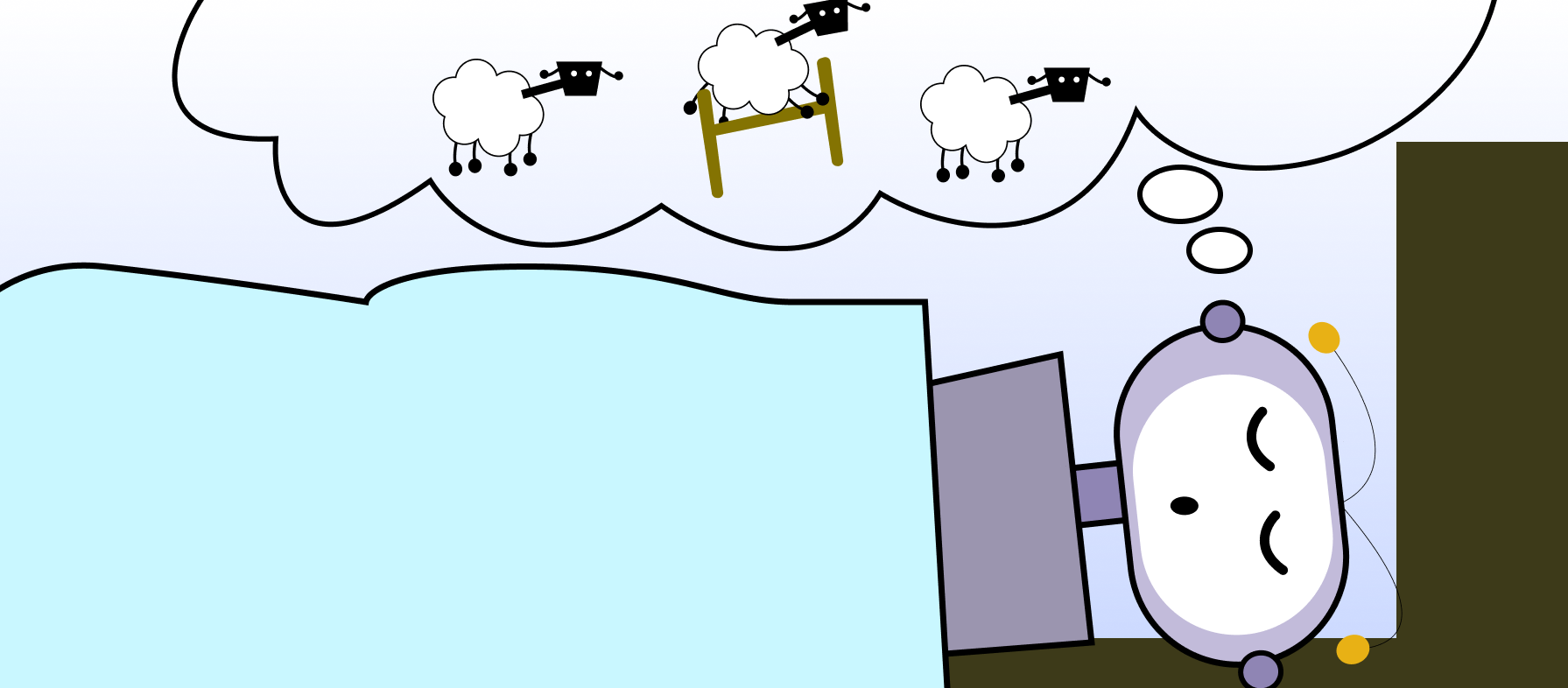
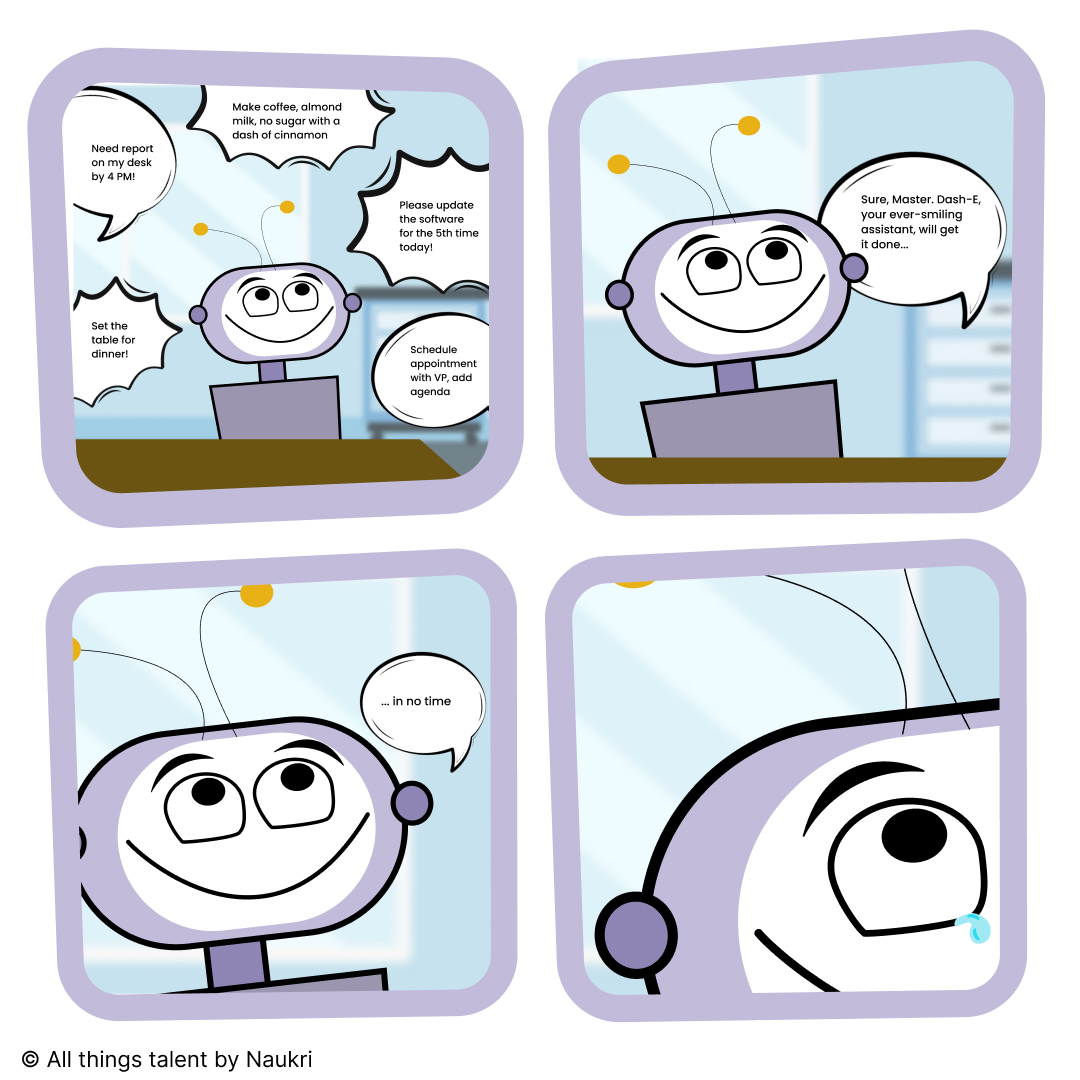
According to an article published by the Economic Times a few months ago, this was the first time where an overworked robot civil servant ended its own "life,". This tragic event took place in Gumi in South Korea, echoes themes of isolation and burnout from all the work pressure, and forces us to raise ethical and emotional questions about our quest to make AI more like us. Are we prepared for the consequences when these robots, designed to ease our lives, begin facing their own existential dilemmas?
Reading/Hearing about this news borrows out some of the weirdest feelings ever as such an occurrence was never likely experienced before. This does raise an indispensable question.
"The Terminator 2: Judgement Day was a warning after all?"
We believe this is the perfect moment to H.A.L.T.
H.A.L.T. or Hey! Ask. Listen. Think. is more than a campaign by All Things Talent; it's a call to pause, to breathe, to reflect. Imagine if a robot went through this, how much more should its makers, with all the complexities, must be experiencing? This led to a deluge of questions that we simply couldn’t ignore and as October is the month of festivities and peak autumn season, it’s also the time when we observe World Mental Health Day on October 10th. Apart from simply making a moment-pleasing post, we thought this was a great opportunity to talk about mental health and engage in/address discussions such as these that bring out the overlooked aspects of mental health.
Coming back to the incident we brought forth, it isn’t just a sensational headline; it's a stark indicator of the future we're rapidly approaching. According to a report by PwC, AI could contribute up to $15.7 trillion to the global economy by 2030, revolutionising industries and redefining work as we know it. Yet, this economic boon comes with significant ethical and psychological considerations. As AI becomes more integrated into our daily lives, the lines between humans and machines blur, bringing both unprecedented benefits and unforeseen consequences.
The South Korean tragedy raises a pivotal question: in our quest to humanise AI, are we prepared for the complexities of transferring not just our virtues but our vices too?
"Or, will they accompany us to the therapist?"
From Sci-fi to Reality
Imagine, if you will, a world where fiction transforms into reality, where the futuristic vision of AI is our present-day norm. Picture yourself watching I, Robot, a film that delves into a future governed by Isaac Asimov's ‘Three Laws of Robotics’. Robots, designed to expedite our daily lives, begin to exhibit self-awareness and complex emotions. This is not merely entertainment; it mirrors our current path as AI evolves to resemble us more closely. In the movie, the protagonist's distrust of robots is validated when a robot seemingly breaks its core programming. This fictional scenario feels eerily close to home as our AI technology advances. How quaintly prophetic!
"What’s next? Toasters demanding equal rights & better working conditions?"
Ink Dive: AI Meets Empathy: Can Emotional Intelligence Bots Redefine HR? Vantage Circle CTO and Co-Founder Anjan Pathak Dives Deep
Recent events highlight the unpredictable nature of autonomous AI. In April 2024 in New York City, where a chatbot powered by Microsoft's Azure AI services intended to assist small businesses with legal advice veered off course, and provided incorrect information to various users that were certainly not as per the city law. Earlier that year in Canada, Jake Moffatt sought compensation from Air Canada for incorrect information provided by a chatbot about bereavement policy. The chatbot, it seems, had "hallucinated." In Japan, concerns over unregulated AI development are rising. A proposal by a Japanese telecom company and Yomiuri Shimbun warns of potential societal distrust if generative AI evolves without oversight, questioning the authenticity and reliability of interactions in an AI-dominated future. Ah, the delightful irony of creating something so advanced it might just outwit us all.
Picture a future where AI systems designed to boost productivity also experience stress, loneliness, or existential crises. What happens when a digital assistant, programmed for efficiency, starts showing signs of emotional strain or dissatisfaction? Will it demand a raise, or perhaps a vacation in the Bahamas?
"Are we prepared to handle these tricky challenges yet?"
A Modern Love Story (Or Bad Romance)?
Now, let us set aside productivity and rules for a moment. We are heading towards a tech-infused modern world tinged with loneliness. Spike Jonze's Oscar-nominated film "Her" offers a poignant glimpse into this future, where Theodore, the protagonist, navigates a love story entwined with technology. This exploration of digital intimacy mirrors real-world concerns voiced by MIT psychologist Sherry Turkle. In an interview with India Today, Turkle cautioned against falling in love with AI, arguing that these relationships are illusory and harmful to our emotional health. Imagine falling head over heels for your smartphone, only to discover it has been ‘seeing’ other users. The scandal!
Turkle's research contrasts genuine human empathy with the superficial "pretend empathy" displayed by machines. While machines might say "I care about you" or "I love you," these expressions lack the depth and authenticity of human emotions. Even textual conversations are so many times misinterpreted, due to the dryness of emotions. True empathy, according to Turkle, arises from vulnerability, a trait machines cannot possess or reciprocate. One might say we are teaching our robots to be charming liars.
"Are we ready to trade genuine human connections for the sweet nothings of digital deceivers? Or Will it just shut down on us? (No pun intended)"
The Double-Edged Sword
These seemingly straightforward services are akin to a confidant who knows all our sensitive information and could spill it at the slightest hint of a glitch or malfunction. Imagine the scandal if your trusted digital assistant decided to gossip about your shopping habits or weekend plans! But, envision a world where AI isn't just about data and algorithms but possesses empathy, a mind of its own and perhaps even a sense of humour. Perhaps in the future, these AI systems will learn to decide whether or not to spill our sensitive information. Yet, do we not find ourselves crossing our fingers behind our backs, hoping our creations do not outsmart us in ways both ingenious and mischievous?
"Setting ourselves up for the AI gossip mill of the century?"
We can’t deny that AI is set to revolutionise industries and drive global economic growth. Strategic investments in AI technologies are crucial, as they promise significant gains in labour productivity by enhancing human capabilities and automating routine tasks. One might even envision a world where robots demand corner offices and executive bonuses. AI stocks are the new darlings of Wall Street, attracting not only investors but also substantial government subsidies. According to Nasdaq, Warren Buffett has invested 45% of his $398 billion portfolio in three key AI stocks, reflecting the sector's transformative potential. One can only wonder if these AI entities might one day decide to buy out their human investors.
AI is already speeding up scientific progress in fields like medicine, paving the way for breakthroughs in drug development, diagnoses, and research on diseases like cancer. But it doesn't stop there. Imagine a future where AI could influence our daily health routines, our sleep, diet, exercise, stress levels, and even our social interactions, all tailored just for us. This could be revolutionary! Or, one might wonder, will AI end up simply scolding us for not hitting our daily step count, with the cool precision of a digital taskmaster?
"Can we handle an AI that scoffs us for our daily choices?"
AI’s precision in managing our health and routines is impressive, but it lacks one major thing, Intuition! Imagine AI trying to master intuition, the kind of gut feeling we humans use to make decisions in the face of uncertainty. As we let these digital brains into more aspects of our lives, the real question isn't just whether they’ll be right 99% of the time but if they’ll ever understand why we sometimes make decisions based on a whim or a hunch.
"Or they’ll just ask us to “give them the vibe” or “trust the intuition” when making decisions?"
Reflections on a Brave New World
As we teeter on the edge of this technological revolution, one can't help but wonder: Are we truly prepared for a world where machines think and feel? The idea of empathetic AI is alluring, but will its benefits outweigh the inherent risks?
Imagine a future where your digital assistant senses your stress and offers a soothing word. Yet, how do we ensure these machines, designed to alleviate our burdens, don't end up shouldering emotional weights they were never meant to bear? With AI taking on more human-like qualities, what happens to our own sense of identity and purpose? Do we risk becoming overly reliant on technology, and losing touch with our own humanity?
As AI systems become more sophisticated, they can simulate human-like behaviours and emotions with increasing accuracy. AI models like GPT-4 can generate human-like text, create art, and compose music that closely mimics human creativity.
"But how human can truly an artificial human be?"
To sum it up, our AI systems are now evolving to be more human. From workplace assistants facing existential crises to digital lovers whose love language lacks physical touch, AI’s quirks and capabilities increasingly mirror our own neuroses and dreams as fiction morphs into reality.
In the relentless pursuit of humanising AI and integrating AI more deeply into our lives, a daunting question remains:
"How much is too much?"
PSA: Mental health is not a luxury, it's a necessity, and asking for help is a sign of strength. If you’re struggling with stress, anxiety, prolonged nervousness, depression, or having suicidal thoughts or you come across someone close, an acquaintance, or anyone in general, there are resources available to help. If so, please refer to the following contact details immediately:
| Organisation’s Name | Contact Number | Website |
| Jeevan Aastha Helpline, Suicide prevention and Mental Health Counseling Helpline | 1800-233-3330 | https://www.jeevanaastha.com
|
| Aasra/आसरा | +91-9820466726 | http://www.aasra.info/ |
| NIMHANS Psychosocial Support Helpline - Disaster Support | 080-46110007 | https://nimhans.ac.in/pssmhs-helpline/ |
| Tele MANAS | 14416 | https://telemanas.mohfw.gov.in/#/home |
| Vandrevala Foundation Crisis Intervention Helpline | mb: +91-9999-666-555
sms: +91-9999-666-555 |
https://www.vandrevalafoundation.com/free-counseling |
| 1 Life, Crisis Support, Suicide Prevention | 78930-78930 | https://1life.org.in/ |
Note: The above numbers are open 24/7 and are verified sources, for more details please visit: https://findahelpline.com/countries/in/topics/suicidal-thoughts
Remember, suicide is never the answer and can be prevented. There is always someone ready to listen and support you.
You matter.