


With too much bhaukal on the cards, Amazon Prime's ‘Mirzapur’ is finally back with a new season after a long hiatus of four years. The fans of the critically acclaimed web series are aware that it is a gripping tale of power, ambition and survival, set against the backdrop of the lawless town of Mirzapur in Uttar Pradesh. With compelling characters like Kaleen Bhaiyya, Guddu Pandit, Golu Gupta and Munna Tripathi, the show emphasises that power is the ultimate currency in the badlands of Purvanchal and the quest for the Mirzapur ki Gaddi has moulded the characters in the series to travail treacherous terrains while gaining profound insights into the principles of effectiveness and leadership, albeit in unconventional ways.
In Stephen R. Covey's seminal work, The 7 Habits of Highly Effective People, he outlines timeless principles that guide individuals towards personal and professional success. Many successful leaders still quote the visionary author while sharing motivating anecdotes from life. Surprisingly, these habits find a natural fit in the brutal and power-hungry universe of Mirzapur. As we explore Covey's seven habits, we will draw parallels to the characters and events in Mirzapur, highlighting how these principles are woven into the fabric of their survival and dominance. While characters in the series are often plodding the tightrope of life and death, let’s delve into how the late motivator’s wisdom is subtly ensconced in such a high-stakes environment.
1. Be Proactive/Taking Initiative Like Guddu Pandit
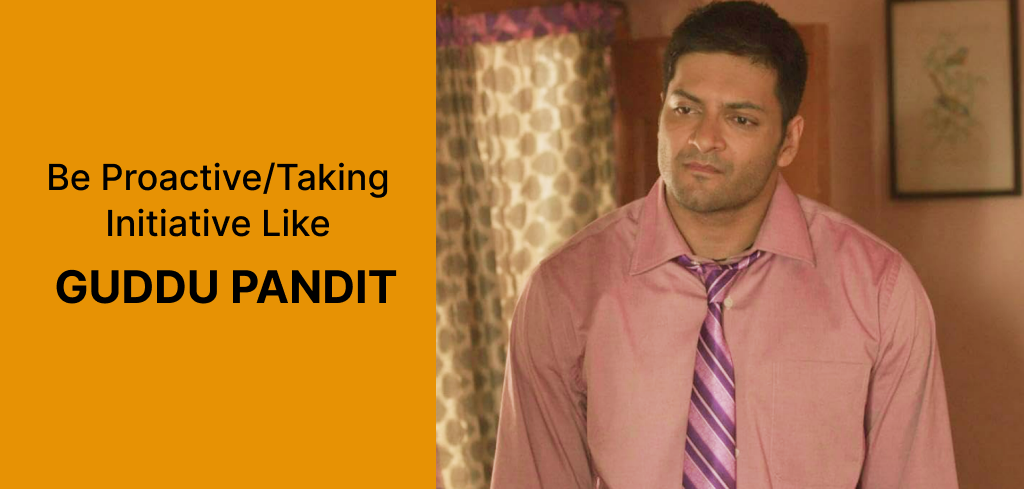
In Covey's framework, being proactive means taking responsibility for your actions and behaviours, rather than being reactive to external circumstances. Guddu Pandit exemplifies this trait as he evolves from a naive youngster to a determined avenger. His proactive decision to seek vengeance for his family's tragedy sets the course for his transformation and survival in Mirzapur's brutal landscape. Despite numerous setbacks, his proactive mindset keeps him focused and resilient, explains why he say "ab humko chahiye full izzat (now I command total respect)"
2. Begin with the End in Mind/Kaleen Bhaiyya's Calculative Mindset
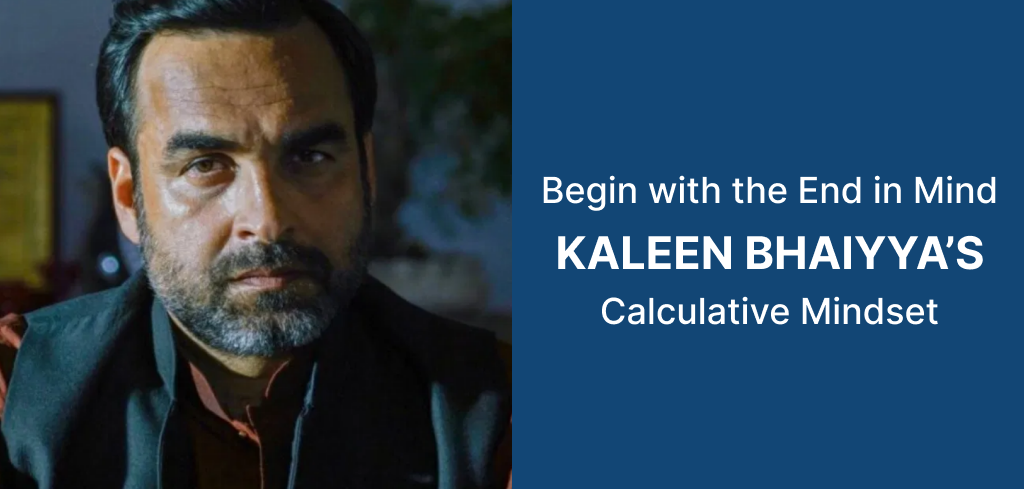
Akhandanand Tripathi or Kaleen Bhaiya, the shrewd kingpin, embodies the principle of beginning with the end in mind. As the current patriarch of the Tripathi crime family, he has a clear vision of expanding his empire and maintaining his grip on Mirzapur at the same time deal with persisting His long-term goals shape his strategies and decisions, ensuring every move aligns with his ultimate ambition. This habit punctuates the importance of having a clear vision and purpose, guiding actions towards achieving significant goals.

Credits: Prime Video
3. Put First Things First/Prioritising Like Golu

Gajgamini ‘Golu’ Gupta's rise in the series is a testament to setting the fundamentals. Covey emphasises the need to prioritise important tasks over urgent, less important ones. Golu, initially introduced as a studious and demure character, prioritises her quest for justice and revenge after the tragic events that upended her life. As her character developed in the maiden season, she was drawn to depraved socio-economic conditions in her city and contested student elections shedding her unassuming image as she knew this was the stepping stone to change and counter the grim realities of her native place. Her ability to focus on what truly matters propels her into a position of power and influence, showcasing the impact of disciplined prioritisation.
Ink Dive: From Pradhan Pati To Sachiv Ji! Workplace Lessons We Can Learn From Panchayat Season 3
4. Think Win-Win/Alliances and Partnerships

Akin to Game of Thrones, in Mirzapur, you win or you die. The cutthroat setting of the latter showcases that alliances and partnerships are crucial for survival. Covey's principle of thinking win-win is about seeking mutual benefit in interactions. Supporting characters like Bablu Pandit and Maqbool strive for win-win scenarios, whether it's forming alliances to strengthen their positions or negotiating deals that benefit all parties involved. Despite the inherently adversarial environment, moments of cooperation reflect the power of collaborative success.
5. Seek First to Understand, Then to Be Understood/Sharad Shukla's Strategy and Madhuri Yadav’s Cunning Tactics

Sharad Shukla, a relatively understated character, exemplifies the habit of seeking first to understand, and then to be understood. From his first appearance in Season 2 as a series regular, he exudes extreme adroitness in his plans for payback. Covey argues that effective communication starts with empathetic listening. Sharad's strategic approach involves understanding the motives and weaknesses of his adversaries before making his moves. This deep understanding allows him to navigate the choppy waters of Mirzapur's politics with a measured and informed strategy.
Similarly, Madhuri Yadav showcases this principle through her ability to understand the political climate and the power dynamics within Mirzapur. As the widow of the former CM, her entry into the Tripathi family and her subsequent rise to power demonstrate a keen sense of understanding others before asserting her position. Her genteel persona, and ability to listen and adapt make her a formidable player in the power game of Mirzapur.
6. Synergise/The Power of Collaboration

Synergy, the idea that the whole is greater than the sum of its parts, is evident in the various collaborations throughout Mirzapur. Characters like Guddu and Golu, who might seem mismatched initially, combine their strengths to form a formidable alliance against the Tripathi clan. Meanwhile, the warring Tripathi Brothers’ scions purposefully brush aside their parental squabbles and shake hands to form a dominant congregation and thwart Guddu and Golu’s advances. Their synergistic partnership highlights Covey's principle that collaboration and teamwork can lead to outcomes that surpass individual efforts.
7. Sharpen the Saw/Constant Learning and Adaptation

Sharpening the saw, Covey's seventh habit is about continuous improvement and self-renewal. Like Bear Grylls said ‘Improvise, Adapt, Overcome’, in the ever-changing dynamics of Mirzapur, characters who adapt and learn new skills tend to survive and thrive. Guddu's physical training and strategic planning, Munna’s unflinching quest for the apex throne, Golu's transition from a bookworm to a ruthless player, Kaleen Bhaiya's adaptability in maintaining his power, the Tyagis’ mindful ways of dealing with different allies, Ramakant Pandit’s acceptance of fate and Zarina’s quick rise to ranks are all examples of this principle in action. Their constant learning and adaptation ensure they stay relevant and effective in a volatile environment.
While Mirzapur may seem like an unlikely setting to find lessons in personal and professional effectiveness, Covey's 7 Habits transcend contexts. The characters' journeys in the series provide captivating illustrations of these timeless principles. From the stellar leads like Munna, Kaleen Bhaiyya and Beena to the indomitable supporting characters comprising Dimpy, IG Dubey and Vaudha, the world of Mirzapur vividly brings to life the habits that drive success and resilience. So, as you navigate your own challenges, remember the lessons from Mirzapur and Covey's wisdom—an unexpected but powerful combination. Let's hope that Season 3 delivers even more thrilling moments and valuable life lessons.