

Imagine a boardroom: the scene is set, someone is presenting, and most of us would likely picture a man at the front. This social experiment was part of a popular marketing campaign that explored how people envision social situations and assign gender roles. When asked to imagine various scenarios—whether it’s a doctor, a CEO, or a presenter—most people unconsciously fell back to the traditional gender norms. These ingrained biases, though often invisible, are deeply embedded in our everyday lives, including the workplace. They shape who gets heard, who leads, and whose contributions are valued. And it’s these biases that continue to hinder the progress of countless women, especially in decision-making and leadership roles.
Traditional measures of gender equality—such as the number of women in a room—are often inadequate in revealing the full picture. Women may be present, but they’re often relegated to passive roles or restricted to discussions on certain topics, limiting their influence. This gap gave birth to the Gender Gap App (G-App)—an AI-powered tool designed to measure and address gender disparities in real time, both at conferences and beyond.
The G-App was born from a conversation between Caitlin Kraft Buchman, Founder and CEO of Women at the Table, and Rebecca Parsons, Chief Technology Officer at Thoughtworks. When Buchman proposed the idea of using AI to quantify gender biases in high-level events, Parsons immediately saw the potential. This vision quickly gained traction, with Parsons connecting Buchman to Thoughtworks' team in India, who began developing the app. The result is a cutting-edge tool that offers data-driven insights into the underrepresentation of women, helping organisations identify biases that are otherwise difficult to detect.
Piloted at the United Nations, the G-App has already proven to be an invaluable resource for uncovering gender gaps in discussions and decision-making. By measuring not just who is in the room, but who speaks, how long they speak, and which topics they address, the app exposes the subtle, yet pervasive dynamics that perpetuate gender inequality.
The Role of AI in Advancing Diversity and Inclusion
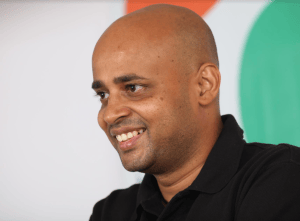
The Gender Gap App aligns with Thoughtworks' broader commitment to using technology for social good, particularly in promoting diversity and inclusion. Satish Viswanathan, Head of Social Impact at Thoughtworks, explains that the company has long recognised the power of AI and machine learning in tackling complex societal challenges. The G-App is a prime example of this mission in action, employing technology to provide clear, data-driven analysis of gender disparities in professional settings.
“The G-App doesn’t simply track who is in the room,” says Viswanathan. “It quantifies participation and influence by analysing metrics like speaking time, the topics discussed, and the roles people take on. This enables organisations to identify the subtler biases that persist even when gender parity appears to have been achieved.”
The app goes beyond just counting women in the room—it examines whether women are truly engaged in all areas of conversation or are being relegated to topics often associated with gender-specific concerns, such as health or education. In environments where gender equality is presumed, the G-App reveals the hidden imbalances that surface-level statistics miss.
Beyond conferences, the tool has broader implications. Viswanathan points out that the G-App could be used to assess leadership dynamics in corporate boardrooms, policy-making environments, and government institutions, helping to foster more inclusive and equitable decision-making processes.
However, while AI is a powerful tool, Viswanathan acknowledges its limitations. “AI systems, including the G-App, are only as unbiased as the data they’re trained on,” he cautions. “It’s essential to maintain human oversight to ensure that AI analysis remains contextualized and ethically sound.” This is why Thoughtworks has incorporated “explainability” features into the app, ensuring transparency in how data is processed and how conclusions are drawn.
A Partnership for Systemic Change
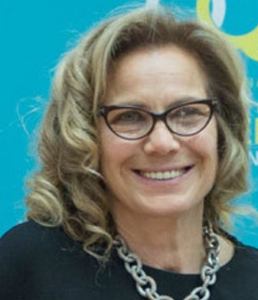
For Caitlin Kraft Buchman, the G-App represents much more than a technological breakthrough—it is a tool to drive systemic change. Women at the Table, the organisation she founded, is focused on creating long-term solutions to gender inequality by challenging the very systems and structures that perpetuate it. The G-App plays a central role in this mission by providing organisations with concrete, actionable data that highlights gender imbalances in decision-making settings.
“We want to go beyond just counting how many women are in a room,” says Buchman. “We want to understand who gets to speak, and what they’re speaking about. The G-App not only highlights when women are absent, but it shows when they’re not being heard or influencing critical decisions.”
The collaboration between Women at the Table and Thoughtworks stems from a shared vision of using technology to expose hidden biases and drive gender equity. When Buchman approached Rebecca Parsons with the idea of an AI-powered tool to measure gender biases, Parsons immediately recognised the potential to create a scalable, data-driven solution. By merging Women at the Table’s expertise in gender equality with Thoughtworks’ technological prowess, the partnership has produced a tool that not only uncovers biases but also provides organisations with actionable insights to drive meaningful change.
Overcoming Barriers to Gender Parity
One of the most significant barriers women face in leadership roles is not just their underrepresentation, but the lack of influence they often have, even when they are physically present. While women may hold seats at decision-making tables, they are frequently marginalised in discussions, particularly on critical issues like governance, finance, and climate change. The G-App helps organisations measure these disparities by tracking who speaks and which issues are addressed.
“In many international forums, women may make up 40% of the attendees, but men often speak 80% of the time,” says Buchman. “And when women do speak, they’re often expected to address topics like health or education, rather than core issues like governance or economics.” By tracking these disparities, the G-App provides the data organisations need to drive systemic change. This allows them to take action, such as adjusting how discussions are moderated or ensuring equal speaking opportunities, particularly on topics historically dominated by male voices.
This data-driven approach also helps identify where structural barriers to women's participation persist—whether in boardrooms, policy meetings, or conference panels. Over time, this kind of insight can help dismantle the subtle yet deeply ingrained forces that keep women from fully participating in leadership and decision-making roles.
Looking Forward: Expanding the Reach of the G-App
Looking ahead, both Thoughtworks and Women at the Table envision a future where the G-App’s application extends beyond conferences to other sectors and contexts. “The G-App’s ability to analyse gender dynamics can be valuable in assessing leadership in corporate settings, government institutions, and even local councils,” says Viswanathan.
Buchman agrees, adding that the tool could be adapted to examine other forms of inequality, such as race, age, and nationality. “Intersectionality is key,” she says. “The G-App is just the beginning. The goal is to create tools that address multiple dimensions of inequality simultaneously, offering a comprehensive view of representation and influence across all sectors.
The collaboration between Thoughtworks and Women at the Table highlights the powerful role technology can play in addressing systemic gender inequalities. The Gender Gap App is more than just a tool for measuring bias—it’s a roadmap for creating more inclusive, equitable spaces where everyone’s voice has the opportunity to be heard and valued. By leveraging AI to uncover hidden disparities, the G-App is helping organisations make data-driven decisions that advance gender equality and drive lasting change across industries. With continued innovation and collaboration, this tool has the potential to reshape how we think about leadership, influence, and equality—creating a world where women’s voices are not only heard but are also leading the conversation.