

As global teams become the norm and generational divides sharpen in the workplace, HR leaders are increasingly being called upon to act as bridge-builders between cultures, time zones, and expectations. What does it take to create a workplace where inclusion isn’t just policy, but practice?
In an exclusive interview with All Things Talent, Neha Arur, Senior Director and Regional Human Resources Lead at ZS, a global management consulting and technology firm, sheds light on the everyday actions and mindset shifts needed to foster a truly inclusive, cross-cultural, and generationally sensitive work environment.
In your experience, what are the most common challenges organisations face when integrating cross-cultural teams, and how can HR leaders proactively address them?
Over the years, the world has certainly shrunk. When I began my career in 2000, technology existed, but it often created more divide than connection. Today, work and operating models have evolved significantly. Having worked in both Indian and international markets, one key reflection for me is the importance of cultural appropriateness.
Unconscious biases, language nuances, and different social norms can easily create friction if not acknowledged. Something acceptable in one culture might be taboo in another. I have handled large outsourcing deals in Europe and now work at ZS, a global management consulting and technology firm where collaboration across geographies is integral.
A key learning is to keep an open mind to local talent markets while anchoring on a consistent philosophy of how we treat people.
At ZS, we maintain a unified competency framework across regions. While the roles may differ, for instance, client-facing roles in the US might be more sales-oriented, we don’t rank talent by location. We focus instead on meeting client needs through region-specific strengths.
HR leaders can bridge cultural gaps by ensuring consistency in core values like pay for performance, career progression, and employee experience, while tailoring practices like hiring or university engagement to local norms. Listening to employees through regular pulse surveys also helps to ensure that we are aligned globally, but sensitive locally.
When you create equality in the experience, cultural differences become a strength, not a barrier. ZS is deeply committed to fostering a diverse and inclusive environment, driven by our core values of treating people right, getting it right, and doing the right thing.
I would also like to add another important point: English is not the primary language in many regions.

How can leaders ensure global collaboration is inclusive and respectful, especially when time zones or cultural norms clash, and how can we avoid imposing our defaults on others?
That’s a great question. Two words come to mind: self-awareness and intentionality. Inclusion begins with self-reflection. Leaders must recognise their blind spots and cultural conditioning. For instance, certain gender-related challenges may be more prominent in India than elsewhere; awareness of such context-specific issues is key.
At ZS, we prioritise enabling a culture where all can thrive across organisational levels. We place equal emphasis on the holistic well-being of our people, offering employee assistance program (EAP) counsellor tie-ups with leading firms for comprehensive counselling support. Our ongoing programs on mindfulness and regular webinars further promote mental health awareness and resilience among our workforce.
Intentionality is equally important. Small but meaningful actions like being aware of holiday calendars across regions and respecting local work timings go a long way. It is jarring for someone to be scheduled for a meeting on Diwali or Thanksgiving. And while business needs may require late evening calls, especially in India where many teams serve global clients, we can be mindful of when we schedule them. For example, avoiding Friday evenings allows people to truly disconnect.
In some organisations I have worked with, it was acceptable to say, “I would prefer not to join a call after 6 p.m. on Friday.” That didn’t mean we never attended such calls; it meant we had a choice, and that choice was respected. That sense of psychological safety is powerful. When people feel they can say no without consequences, it supports better work-life balance and creates space for them to show up authentically.
As leaders, it is also important to recognise that not everyone will speak up equally. In multicultural teams, some individuals may hesitate to voice their opinions due to language, confidence, or cultural norms. It helps when leaders actively invite input—“Hey, I haven’t heard your view yet, and I would value your perspective.”
Simple, day-to-day habits like ensuring meeting groups represent diverse perspectives or asking if we have included the right voices in a conversation can go a long way. None of this is rocket science. It is about building intentional habits that foster inclusion and trust over time.
You have touched on an important issue—differing expectations around boundaries, especially in regions like India, where 'hustle culture' and the pressure to always be available are deeply ingrained. What advice would you offer to organisations trying to foster healthier boundaries for their teams? What role can cultural training play in building empathy and supporting more balanced cross-cultural collaboration?
I agree. These are such deep-rooted behaviours and the product of years of conditioning that they won't disappear overnight. Some companies will be early adopters, the trendsetters, while others will be fast followers. Each of us must do the right thing. Similarly, within a company, some leaders will embrace inclusion naturally, while others will learn from role models and become fast followers and adapters, thinking, "Oh, this is the norm."
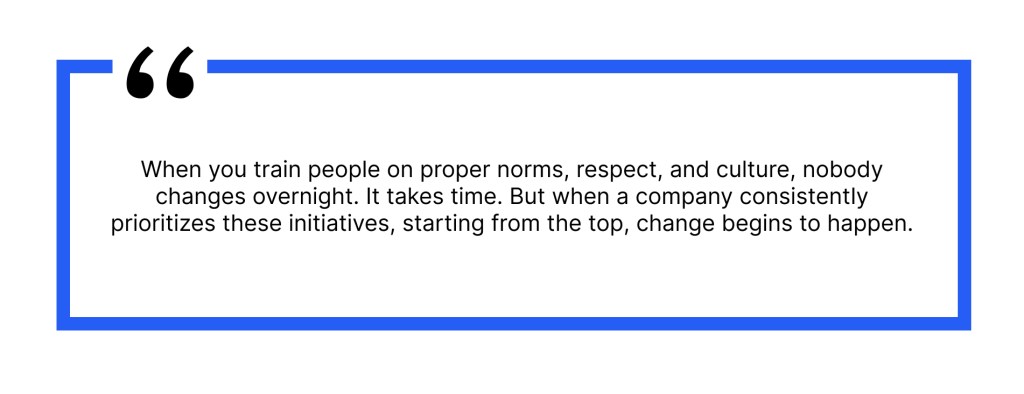
Training top leadership on appropriate behaviour and then cascading it down is essential. You can't expect the lowest person in the hierarchy to be respectful if those at the top aren't. First, establish the right norms at the top and then cascade them down.
Training establishes accountability. I might not be perfectly inclusive yet, but I can now hold someone accountable to a standard of behaviour because it has been explicitly addressed. I've trained them on it and communicated my expectations. Training is a starting point, but it's not enough on its own. These values must be embedded in every people process, from candidate experience to offboarding.
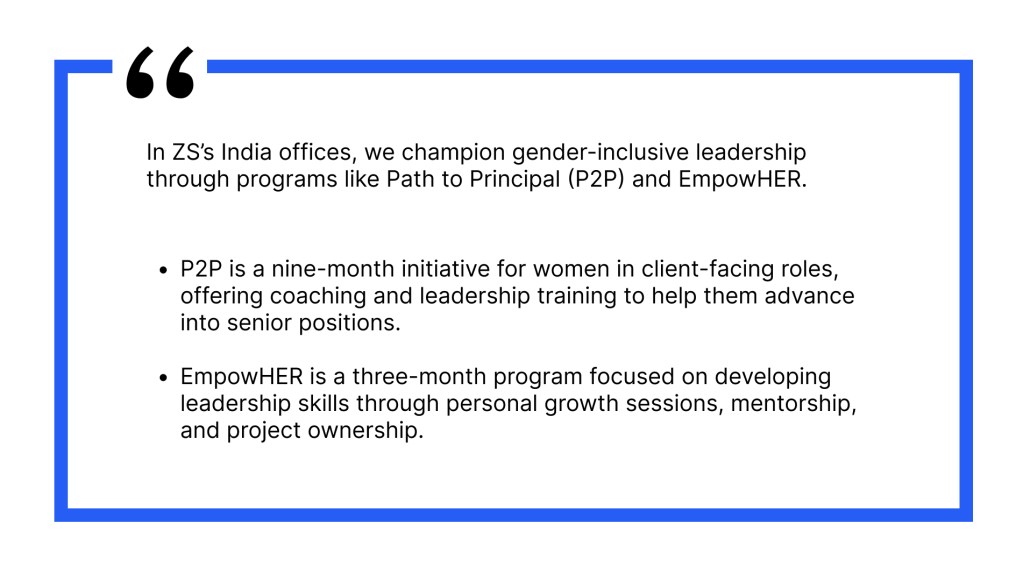
ZS also fosters opportunities for women colleagues across its India offices to connect through dedicated community forums, enabling them to share experiences, learn from one another, and engage with senior leaders for career guidance and growth.
You have highlighted the role of leaders in shaping inclusive, healthy work cultures. How can they model this daily, especially in addressing unconscious bias and encouraging teams to set boundaries and disconnect?
One example from my own experience: whenever I go on leave, I make it a point to tell my team not to call me unless it's truly urgent. And I assure them that I won’t call them either. It’s a conscious choice to model that behaviour. The idea is to make them feel safe and respected in setting similar boundaries. Sometimes, these actions aren’t just about yourself—they’re about setting a new norm. When leaders visibly uphold these boundaries, it permits others to do the same without guilt or hesitation. That’s how you build a culture of trust and well-being, one action at a time.
Also, at a certain level of seniority, I can choose to say I’m unavailable—but this isn’t just about me. It’s about how the broader team feels. When I say, “Don’t call me,” and I also don’t call them, it sets a precedent. It signals that this is acceptable behaviour within the team. Some may question why I make that statement, but for me, it’s about the kind of culture and norms we want to create together.
While talent and skills have evolved, and the world feels smaller thanks to social media, some core values remain timeless. At ZS, our three core values truly serve as a guiding light. I've worked at many organisations, but what stands out at ZS is how deeply these values are lived, not just stated.
In many places, values are words on a wall. Here, they’re part of daily decisions. Early on, we didn’t rely heavily on formal policies. We simply asked ourselves: Did I do the right thing? Did I treat the other person right?—and often, that was enough to guide the action.
Now, while our policies are documented, it's the values that continue to shape behaviour. They help navigate dilemmas, bring consistency across cultures, and build trust. Policies may vary across regions, but when values are deeply embedded, they foster cultural appropriateness and a strong, unified foundation.
Cross-cultural integration isn’t just a global team challenge—it plays out within local teams too. Add generational differences to the mix, and team dynamics grow even more complex. How can organisations navigate this evolving landscape and bridge these cultural and generational divides?
The challenge today goes beyond traditional cultural boundaries—it's also generational. Leaders are largely Gen X or Millennials, while many of their team members are Gen Z. This often creates friction: one group may see the other as entitled, while the other feels misunderstood or unheard. These generational cultures bring their working styles, communication preferences, and expectations around things like office presence, attire, and hierarchy.
Understanding and navigating these differences is essential. For example, when we rethink employer branding on campuses, we realise that long presentations may no longer resonate—short, creative videos might work better. Even for internal events, like our mid-year values awards, I have to tailor the experience. I can't expect a four-hour formal event to excite everyone. We have to meet people where they are.
Of course, there will always be individuals in every generation who stretch new norms too far and others who approach them with balance. That’s human nature. The key for organisations is to build programs and cultures that are inclusive, adaptive, and designed with empathy, keeping in mind not just cross-cultural differences across borders, but also within offices, across generations.
 Mamta Sharma is a freelance journalist committed to sharing stories on talent management, DEIB, workplace culture, alongside narratives on leadership, entrepreneurship, tech innovation and employee wellbeing.