

What if India’s GCCs stopped optimising for cost and started designing for growth?
In this conversation, Shefali Sharma Garg, Chief Talent Officer at Publicis Sapient India, unpacks how early-career talent actually thrives — through continuous learning, lateral moves, real client exposure, and cultures that value clarity over constant availability. From navigating the risky years two to four, to avoiding collaboration fatigue and building future-ready skills through application, not certificates, she offers a sharp, practical view of what it really takes to retain and energise young talent in India’s evolving GCC landscape.
Q1) If we imagine early-career talent as the ‘renewable energy source’ powering India’s GCC growth story, what would you say are the equivalent ‘solar panels’ or ‘wind turbines’ that organisations need to build to truly harness this potential? And which forms of talent-energy are still being left untapped in the current ecosystem?
Early-career talent is unquestionably the renewable energy driving India’s GCC expansion, but the real differentiator is the quality of systems built around them. Potential converts into sustained impact only when organisations put the right infrastructure in place, which is the equivalent of well-designed solar panels and wind turbines that can consistently harness that energy.
One critical element is a workplace where learning is continuous, not event-based. The next decade of GCC growth will be defined less by what people already know and more by how quickly they learn, unlearn, and relearn. This requires an environment where curiosity is encouraged, knowledge sharing is routine, and people feel safe taking calculated risks. When learning becomes a shared mindset, capability compounds.
Another key element is clarity of purpose. GCCs today are core to enterprise transformation, not back offices. Early-career professionals need to see how their work contributes to business outcomes from the start. When that line of sight is clear, they shift from feeling like contributors to thinking like owners.
Two sources of talent energy remain underutilised. One is talent from Tier 2 and Tier 3 cities — motivated, ambitious, and often more stable, yet not engaged at scale. The other is a multidisciplinary talent that blends technology, design, and business thinking. We often over-optimise for deep specialists and overlook those who connect the dots.
There is also untapped potential in lateral mobility. Early-career talent increasingly seeks breadth and exposure rather than linear paths. Organisations that enable this fluidity convert far more potential into long-term organisational energy.
Q2) In the GCC ecosystem, there is often a tension between cost arbitrage and innovation contribution. How do you ensure that early-career hires perceive themselves as innovators, not just cost-savers, and how do you measure that mindset shift in your organisation?
That tension between cost arbitrage and innovation contribution was real for many years, but the GCC landscape has moved on. We are now in what I would call the innovation-arbitrage phase, where the expectation is not just efficient execution but original thinking, differentiated capability, and faster problem-solving.
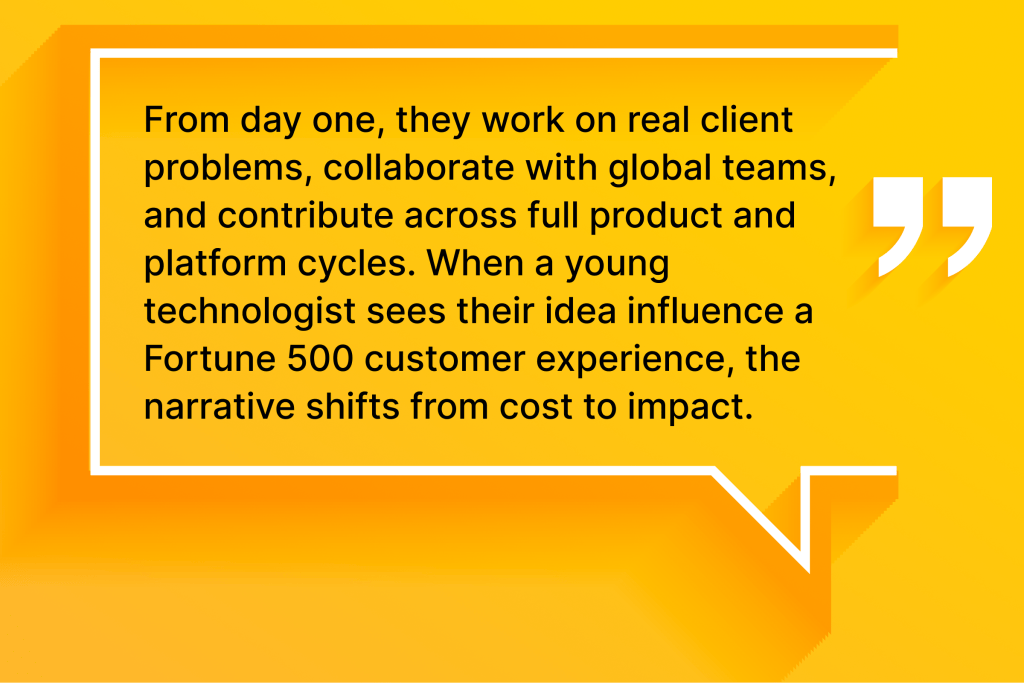
At Publicis Sapient, we have never viewed India as an offshore extension. We see it as a global hub for engineering, design, and creativity, and that framing shapes how early-career talent sees itself. From day one, they work on real client problems, collaborate with global teams, and contribute across full product and platform cycles. When a young technologist sees their idea influence a Fortune 500 customer experience, the narrative shifts from cost to impact.
We have also changed how early-career employees engage with work by placing them in multi-disciplinary teams alongside designers, architects, strategists, and domain experts. This accelerates capability-building and removes the execution-only ceiling. Exposure builds confidence, and confidence fuels innovation.
We measure this mindset shift through both data and behaviour: participation in innovation councils, idea submissions, internal accelerators or patents, client feedback, and the language people use in retrospectives. When it moves from “I complete tasks” to “I shape outcomes,” it is clear the identity has shifted from cost-saver to innovator.
Q3) In one of your write-ups on LinkedIn, you highlighted the rise of ‘collaboration fatigue.’ In GCC environments where cross-timezone coordination is constant, how do you prevent early-career talent from feeling overloaded, and where do you draw the line between productive collaboration and unnecessary cognitive drain?
Collaboration fatigue is real, especially for early-career talent who often equate visibility with constant availability. In GCCs, where cross-timezone coordination is routine, cognitive load builds quietly unless organisations are intentional about how work gets done.
The first principle is to treat time as a shared organisational asset, not an individual burden. We set clear collaboration windows across time zones and protect the remaining hours for focused work. When people know exactly when collaboration is expected, mental strain reduces. It is equally important to cut unnecessary meetings. Not every update requires synchronous time. Structured briefs, decision logs, and asynchronous workflows often create more clarity than recurring calls and allow meaningful contribution without extending the workday.
The biggest unlock is transparency. Clear roles, ownership boundaries, and escalation paths prevent wasted coordination. Availability should never be a proxy for commitment. The goal is to give early-career talent the clarity and cognitive space to think, build, and contribute — without being drained by calendar overload.
Ink Dive: Employability, Not a One-Time Outcome: Inside Varthana’s Continuous Learning Mindset
Q4) Many GCCs in India use the ‘be global, hire local’ mantra. From your vantage point at Publicis Sapient, what are the subtle cultural or cognitive dissonances that early-career Indians in a global centre face when expected to behave like headquarters-side talent? How are you preparing them for that invisible leg-up?
Cultural integration is often a bigger challenge for GCCs than compliance, and early-career talent feels this most. Indian professionals adapt quickly to global expectations, but there is still a learning curve around context, communication styles, and ownership.
One gap is context. Working with a European manufacturer or a US retailer demands a different rhythm, precision, and decision discipline. These nuances are difficult to teach in classrooms, so we prioritise real exposure and client interactions for high-potential early-career talent wherever possible.
The second gap is informal networks and visibility. Headquarters teams often have easier access to sponsorship and high-value work. Early-career talent in India can be technically strong but may not know how to navigate these softer pathways. Many also need support moving from process-heavy environments to a hypothesis-driven, ownership-first mindset.
How we prepare them:
- Clarity from day one
Structured onboarding, role clarity tools, decision frameworks, and buddy systems help people understand how to operate effectively in global teams.
- Training for global behaviours
Focused workshops build consulting skills, presentation confidence, and the language of impact — asking better questions, synthesising insights, and shaping outcomes.
- Psychological safety and authentic voice
We encourage people to show up as themselves rather than imitate headquarters norms. Authentic participation builds trust, visibility, and sponsorship.
The gap is not in capability. It is about making implicit global expectations explicit and giving early-career talent in India structured access to the same exposure and opportunities as headquarters-side talent.
Q5) GCCs are increasingly expected to be centres of ‘future-skills’ (AI, data, design thinking) rather than back-office hubs. How do you balance between training early-career talent in bleeding-edge skills vs solid foundational ones? Is there a trade-off, and how do you tilt towards future-readiness?
I do not see this as a choice between fundamentals and future skills. The advantage lies in building talent that can hold both. Strong engineering basics matter, but it is unrealistic to spend years on foundations while the industry moves rapidly towards AI and automation. The answer is to build AI fluency early and integrate it with core problem-solving capability.
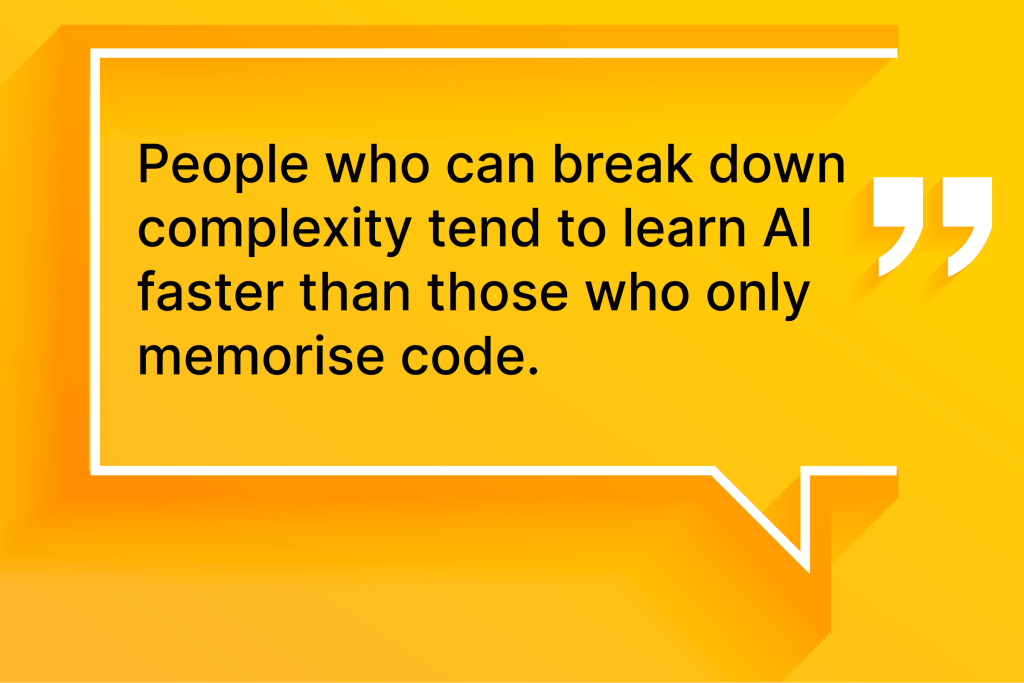
Foundational skills are not only technical. Systems thinking, structured problem-solving, and clear communication are the cognitive anchors that determine how quickly someone can absorb emerging skills. People who can break down complexity tend to learn AI faster than those who only memorise code. Once these anchors are in place, advanced AI, data, or design skills are easier to acquire.
What counts as ‘foundational’ is also evolving. Earlier, it was languages like Java or SQL; today, prompt engineering, ML workflows, and data ethics are increasingly part of the base. Our learning approach reflects this shift. The real trade-off is not between old and new skills, but between passive learning and applied learning. Skills become durable only when used in real contexts, which is why we prioritise learning through live projects rather than isolated courses.
Future-readiness is not a certification. It is a continuous capability built by integrating fundamentals, emerging skills, and real-world applications from the start of a career.
Q6) In many organisations, the ‘Great Jump’ of early-career talent (say years 2-4) is when attrition peaks. What are the subtle micro-constructs (not salary, not title) you focus on to detect and reverse that jump inside your GCC?
The two-to-four-year mark is when early-career talent evaluates identity, growth and relevance. If organisations miss the signals in this period, attrition becomes predictable. We focus on the micro-constructs that shape day-to-day experience long before salary or title enters the conversation.
The first is project variety. If someone has been doing the same work for too long, monotony sets in, and motivation drops. Rotations and exposure to adjacent problem spaces keep people challenged and learning.
The second is network density. People stay when they feel connected. Mentors, communities of practice and peer groups create belonging, and belonging is one of the strongest retention levers in a GCC environment.
We also watch for how often early-career talent gets to engage with clients. When they see their input influence an outcome, their sense of ownership increases. Inclusion in real problem solving is a retention strategy in itself. Purpose alignment is another anchor. Growth today is non-linear, so we use fluid advancement pathways and personalised, AI-supported learning to help people see a future for themselves inside the organisation. The goal is not to stop attrition through control. It is to create an environment where people stay because they feel stretched, supported and seen at moments that matter most.
Q7) If you imagine five years from now, what will be the ‘new-normal’ early-career career path inside an Indian GCC? What are you designing today to make that path credible and visible?
Five years from now, early-career paths in Indian GCCs will look very different. The traditional linear ladder will matter far less; what will matter is range. Young professionals will build portfolios of skills and experiences rather than follow a single technical track. Early roles will emphasise rotations, cross-functional exposure, and problem spaces over fixed teams. Specialisation will come later, once people have the context to make informed choices.
The future early-career professional will be able to connect dots across disciplines, adapt quickly, and contribute beyond a narrow job description. Transparency and versatility will shape how careers evolve.
At Publicis Sapient, we are designing for this future now. Career pathways are fluid and self-driven, not tied to rigid timelines. Our AI-led learning platform continuously assesses skills and recommends personalised development routes. We also spotlight visible role models who have succeeded through non-linear journeys, making these paths credible and helping early-career talent see what is possible.
Q8) What is the one tough question you wish every early-career candidate asked you at an interview for a GCC role (but seldom do), and how would you advise that candidate to frame it and why?
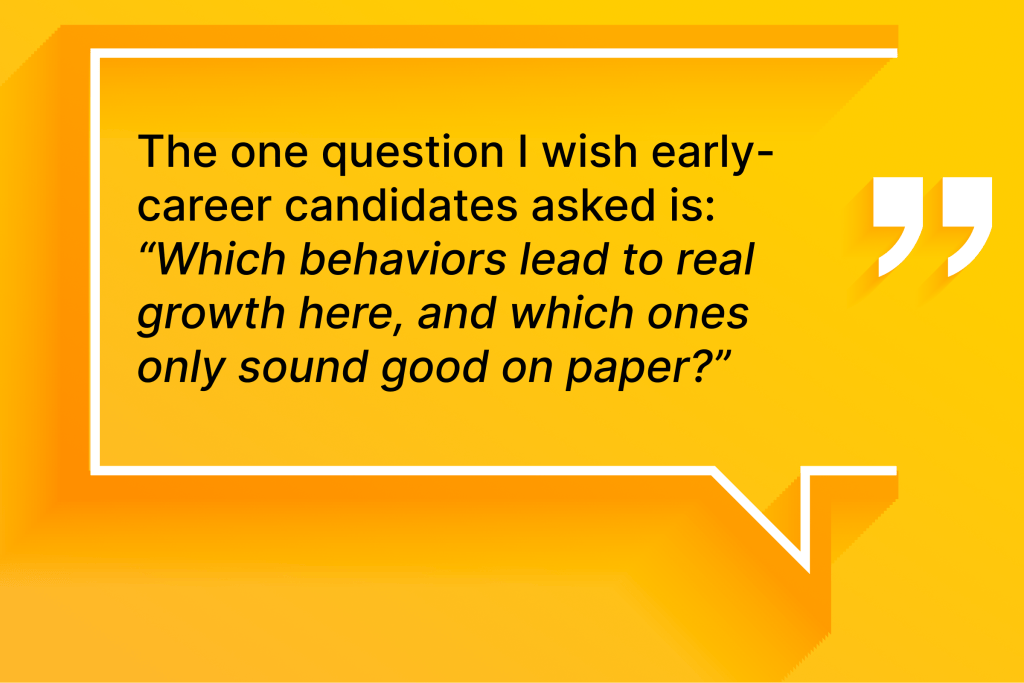
The one question I wish early-career candidates asked is: “Which behaviours lead to real growth here, and which ones only sound good on paper?”
Most organisations publish long lists of values, but early-career professionals rise on a much smaller set of lived behaviours. In GCCs, while leaders may talk about collaboration and humility, those who accelerate fastest tend to demonstrate clarity, ownership, sound judgement, and the confidence to challenge when needed. Many young hires struggle to read this gap, and it shapes their trajectory.
I would advise candidates to frame the question with maturity and intent. For example: “To succeed in a global centre like yours, what do high performers consistently do that others overlook?”
It signals ambition, self-awareness, and an understanding of cross-border complexity, while encouraging honest insight into what the organisation truly rewards.
Q9) If you were to write a letter to your 22-year-old self, newly arrived in an Indian GCC in 2025, what three pieces of advice would you include about surviving and thriving—and why?
- Learn the language of impact and presence, then rehearse it every day
Technical skills will get you noticed; the ability to tell a crisp story about business impact is what gets you into strategic rooms.
Set aside 15–30 minutes each week to turn your work into a one-minute pitch: What is the problem? What did you try? What is your recommendation and the business impact? Over time, this builds the muscle memory to sound like an advisor — decisive, succinct, and value-focused.
- Buddies, sponsors, and exposure > Luck
Your career is shaped as much by people as by projects. Build social capital deliberately. Sit in on steering or partner calls, even as an observer. Schedule one-to-ones to understand what credibility looks like in those rooms. The 'invisible leg-up' is rarely magic; it is a network: who sees your work, invites you to client calls, and sponsors you for key projects.
- Get comfortable with ambiguity, fail fast, and protect your energy
Take smarter risks, not just more risks. Say “I do not know, but I will find out” instead of hiding uncertainty, and ask more questions than you think you should. You will not become everything overnight, but deliberate practice, visible exposure, and intentional networking compound quickly. Be curious, be brave, and be kind to yourself.
Shefali Sharma Garg is Chief Talent Officer at Publicis Sapient India, leading People Operations for its 10,000+ workforce. With nearly 25 years of experience in HR within the technology sector, she specialises in inclusive people strategies, employee engagement and talent development. Approaching two decades at Publicis Sapient, Shefali is widely recognised as a champion of psychologically safe, learning-led workplaces, with a particular focus on India’s growing GCC ecosystem, and is a prolific author and sought-after public speaker featured across leading Indian media and industry forums.