

For more than three decades, Lynette Dsilva has watched the world of talent evolve—from the early outsourcing boom to today’s AI-driven workplace. As VP—HR of Global People Services at Amdocs, she has seen firsthand how the meaning of employer value has shifted for younger professionals. In conversation with ATT, she reflects on what truly matters to Gen Z today: not just purpose or perks, but authentic growth, meaningful work, and the chance to build future-ready skills. She also shares how organisations must move beyond EVP as a promise and instead make it a lived, everyday experience.
You have led talent through multiple talent cycles, from the early outsourcing wave to the current AI-driven era. From your personal leadership journey, what is the most profound shift you have observed in how young professionals define ‘value’ in an employer today? Has EVP moved from being a promise to becoming a lived psychological contract?
Over the years, the definition of value has clearly evolved. Earlier, stability, brand reputation, and long-term career progression were primary factors for young professionals. Today, value is far more multidimensional. Young talent is looking for continuous learning, meaningful work, flexibility, and the ability to build relevant skills quickly.
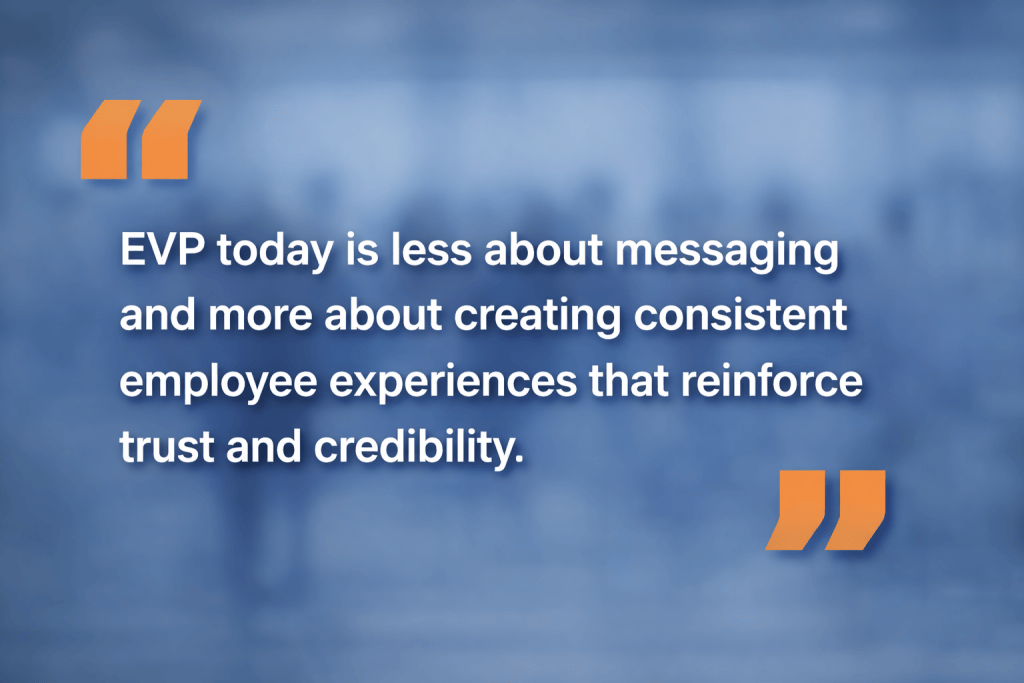
In that sense, EVP has certainly evolved from being a statement of intent to something employees expect to experience daily. Young professionals today are highly attuned to authenticity. They assess whether an organisation truly enables growth, collaboration, and wellbeing, rather than merely talking about it. EVP today is less about messaging and more about creating consistent employee experiences that reinforce trust and credibility.
Amdocs sits at the intersection of telecom, cloud, 5G, and digital transformation. For Gen Z, these sectors may not appear as ‘exciting’ as consumer tech or startups. How do you reposition this ecosystem in your EVP narrative to attract digitally curious talent?
Rather than repositioning the ecosystem, we focus on showing the real impact that the telecommunications industry generates. Telecom, cloud, and 5G power many of the digital experiences Gen Z uses every day, from streaming and gaming to digital payments and connected services. At Amdocs, our teams work on technologies that enable billions of interactions globally, which makes the work both meaningful and intellectually challenging.
For digitally curious talent, the appeal lies in solving complex problems at scale while working with emerging technologies such as generative AI, cloud-native platforms, and advanced automation. We also emphasise the employee experience.
In your experience, do Gen Z candidates today ask more about global exposure than compensation? How has this influenced your talent mobility and international rotation strategies?
Compensation remains important, but increasingly we see young professionals asking about learning opportunities, global exposure, and the variety of experiences they can gain early in their careers. This has encouraged organisations to think more intentionally about mobility and cross-border collaboration. Instead of viewing global exposure only as long-term roles, companies are creating multiple pathways: virtual global teams, short-term project assignments, and structured international rotations. These models allow young professionals to gain international experience earlier while still maintaining organisational agility.
Ink Dive: The Brave Pursuit of the Next: How Organisations Are Enabling Gen Z to Thrive from Day One
With automation and GenAI impacting coding, testing, and support functions, roles traditionally filled by early-career hires, how are you rethinking the entry point for Gen Z into telecom tech ecosystems?
Automation is certainly reshaping industries, but it will also open new opportunities. Rather than focusing only on routine technical tasks, organisations are encouraging early-career talent to develop skills around problem-solving, systems thinking, and working with AI-enabled tools.
Entry pathways are evolving to include multidisciplinary learning, combining technology foundations with exposure to other teams such as product thinking, data, and customer impact. The goal is to help young professionals start their careers with a broader perspective of the digital ecosystem while building capabilities that complement automation.
Are you using workforce analytics to personalise EVP for different Gen Z cohorts—engineers vs digital product talent vs consulting talent—instead of a single employer narrative?
Increasingly, organisations are recognising that a single narrative cannot fully resonate with diverse talent groups. While the core EVP remains consistent, workforce insights and analytics help tailor how opportunities are presented to different talent segments. For example, engineers may prioritise deep technical learning and innovation environments, while digital product talent may look for ownership and experimentation. Data helps organisations understand these nuances and design experiences that feel more relevant without fragmenting the overall culture.
Has purpose become an overused EVP lever when, in reality, compensation growth and skill acceleration still dominate decision-making?
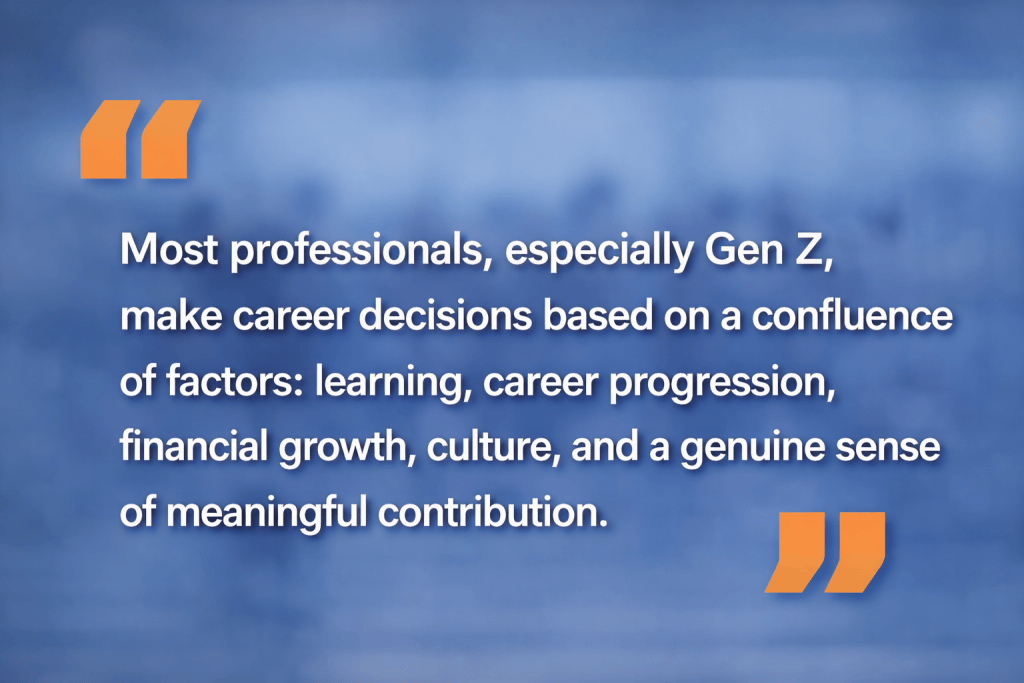
Purpose certainly matters, but it works best when it is authentic and deeply connected to the real work we do, rather than being positioned as a standalone message. Most professionals, especially Gen Z, make career decisions based on a confluence of factors: learning, career progression, financial growth, culture, and a genuine sense of meaningful contribution.
At Amdocs, we strive to maintain this balance by fostering a culture of continuous innovation alongside a holistic approach to employee well-being. Our commitment is to embed innovation in the way we work every day, equipping employees with GenAI tools and AI-powered internal platforms that help resolve problems faster and contribute to a resilient workforce. We also prioritise comprehensive upskilling programmes focused on GenAI, cloud, and automation across all functions, directly linking individual growth to organisational purpose. When employees see their work contributing to larger outcomes while simultaneously building valuable skills and advancing their careers within a culture of respect and equality, our EVP becomes far more compelling and real.
Much is said about what Gen Z wants. But what has Gen Z forced you to unlearn as a leader? Moreover, when your experience disagrees with generational demands, how do you reconcile instinct with analytics while designing EVP and policy?
One of the key things many leaders have had to unlearn is the assumption that career progression must follow a single linear path. Younger professionals often look for more fluid career journeys, faster learning cycles, and greater openness in dialogue with leadership.
At the same time, leadership experience remains valuable in providing a long-term perspective. The balance comes from combining that experience with data and employee insights. Listening actively to what employees are expressing, validating it through analytics, and then designing policies that balance organisational sustainability with evolving expectations allows leaders to make more informed decisions.
Ultimately, it is about maintaining curiosity as a leader, being willing to question old assumptions while ensuring that organisational values and long-term objectives remain strong.
Lynette brings over 25 years of experience in talent management and organisational development across IT and telecommunications. She has led key HR functions and cross-functional strategic initiatives, with expertise spanning compensation, organisation development, people relations, internal communications, HR consulting, talent acquisition, and M&A. Known for her collaborative approach, she thrives on engaging with people and building strong partnerships. Outside work, she enjoys gardening, reading, and long drives beyond the city.