

For centuries, women in science, technology, engineering, and mathematics (STEM) have pushed boundaries, shattered stereotypes, and redefined what’s possible often without the recognition they deserve. Yet, their contributions have shaped the world in ways both visible and unseen.
As we mark the International Day of Women and Girls in Science, it’s not just about celebration, it’s about reflection and action. Why do so few women still make it to the top in STEM? What barriers persist, and how can we dismantle them? More importantly, how do we ensure that future generations of women don’t just enter these fields but thrive in them?
This year’s theme, Unpacking STEM Careers: Her Voice in Science, brings us closer to the answers. Through the stories of five women leaders, we explore the challenges, breakthroughs, and pivotal moments that define their journeys.
My Biggest Challenge: Overcoming Self-doubt and Speaking Up for Opportunities.
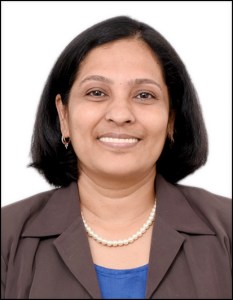
For Shantha Maheswari Sekhar, Markets Leader at EY Global Delivery Services, the toughest barrier in STEM wasn’t technical expertise or industry knowledge—it was self-doubt. "One of my biggest challenges was overcoming self-doubt and speaking up for opportunities," she says. "Growth comes from stepping forward, not waiting to be noticed."
She tackled this by embracing mentorship, developing an experimentation mindset, and committing to continuous learning. Over time, her curiosity became her strength, helping her build confidence and stay relevant. "It was about ensuring my contributions were recognised," she reflects.
Navigating career growth while balancing maternity is another challenge many women in STEM face. While organizations have evolved with policies supporting flexibility and performance management, she believes more targeted interventions are needed. "Accelerating training and reintegrating women into core roles—not just support or enablement positions—is crucial," she emphasises. "From my experience, this is what enables a continued career progression and long-term career growth in STEM."
Thriving in a male-dominated environment also requires confronting imposter syndrome head-on. "Recognising your merit is key," she asserts. A meritocratic mindset—stepping into roles with confidence and visibility—helps reinforce one’s place in the industry. While mentorship plays a crucial role in this journey, offering guidance, validation, and growth opportunities, she believes the responsibility lies with women to actively seek it out. " Maximise mentorship, leveraging it to build resilience, gain insights, and navigate challenges in male-dominated environments," she adds.
A continuous learning mindset and a figure-it-out attitude have been invaluable in her STEM journey. “Embracing challenges with curiosity and adaptability has allowed me to navigate diverse roles, solve problems collaboratively, and grow alongside my peers. Success isn’t about having all the answers—it’s about the willingness to learn, experiment, and evolve with every opportunity,” she shares.
Looking back, she wishes she had been more vocal about her ambitions earlier. "If I could give my younger self one piece of advice, it would be to let go of self-doubt and speak up with confidence," she says. "Opportunities don’t just come to those who work hard—they come to those who advocate for themselves, share ideas, and take initiative. Trusting my abilities earlier would have made the journey smoother and more fulfilling."
As for stereotypes about women in STEM, she is determined to see one debunked entirely: the notion that women have limitations in the field. "Talent, skill, and innovation are not defined by gender," she asserts. "Women excel in technical expertise, leadership, problem-solving, and innovation. It’s time we recognize their contributions without bias or assumptions about their capabilities."
A common misconception, she adds, is that STEM lacks curiosity or creativity. "In reality, STEM thrives on innovation, experimentation, and continuous learning," she clarifies. "It’s not just about technical skills—it’s about solving complex problems, pushing boundaries, and discovering new possibilities. Curiosity drives progress, making it an exciting and ever-evolving field."
Throughout her journey, the best advice she received from a fellow woman in STEM was simple yet powerful: "Stay curious, embrace the unexpected, and enjoy the journey—both personally and professionally." And for those aspiring to enter the field, her advice is just as encouraging: "Explore fearlessly, seek challenges, and never stop learning. STEM is a dynamic space where curiosity and adaptability open limitless possibilities."
‘Your Expertise Defines You, Not Stereotypes’

Structural engineering has traditionally been a male-dominated field, and early in her career, Roshini Nayar, Principal Structural Engineer, SBM Offshore India often found herself as the only woman in the room. “Facing both conscious and unconscious bias, I focused on demonstrating my expertise through results that spoke for themselves. Rather than letting challenges discourage me, I embraced quiet perseverance, seeking out mentors and allies who valued my skills over stereotypes. I also try and stay committed to driving change. Whenever possible, I try to mentor young professionals, advocating for better representation, and working to break down barriers. I aimed to ensure that the obstacles I faced wouldn’t persist for the next generation.”
One stereotype she wants to see debunked? “The assumption that women shy away from high-pressure, hands-on roles. I’ve worked in shipyards under tough conditions—long hours, language barriers, and physically demanding environments. Women in STEM are just as capable of excelling in these spaces. Despite the challenges, I never let myself believe I didn’t belong.” The stereotype that women aren’t suited for such roles isn’t just inaccurate—it actively limits opportunities, she adds. “ Women bring immense technical capability and problem-solving skills to these settings, and it’s time the industry acknowledges and supports that. The more we normalise this, the more inclusive the industry will become.”
The best piece of advice she’s received from a fellow woman in STEM? Perseverance. “Life isn’t easy for anyone, but resilience and perseverance make all the difference. My policy has always been: If you cannot run, walk. If you cannot walk, crawl. But whatever you do, keep moving forward.”
And to aspiring women in STEM, her message is clear: “Your expertise defines you, not stereotypes. Keep learning, keep pushing boundaries, and build a strong support system that empowers you to grow and succeed.”
'I waited a long time before deciding to start a family because I needed to feel secure in my career.'

Anita Domańska, IT Delivery Manager & Deputy of Business Unit Director & Coach at R Systems, a global technology company that designs and develops digital products and platforms, reflects on her journey, highlighting the importance of career security and a supportive work environment in navigating the intersection of career growth and maternity.
"I waited a long time before deciding to start a family because I needed to feel secure in my career," Anita shares. "It was also crucial that my employer supported and understood this life stage." At R Systems, she found a place where employees, especially women, thrive professionally while managing family responsibilities. Many women, even in top positions, have expanded their families while continuing to grow within the organisation. This supportive environment not only ensures a safe space for women but also encourages long-term professional commitment.
Anita’s career blossomed in the months and years after returning from maternity leave. "I gradually increased my working hours, which showed me that women can be incredibly organised and efficient during this period." She attributes her career growth to a company that holds positions open for women returning from maternity leave, offering flexibility and reduced working hours in the early years after their return. "Employers should believe in the effectiveness of women during such times and provide the necessary support," she advises.
Anita admits that her own beliefs and perceptions about what was expected of her were the most challenging. "When I stopped comparing myself, especially to male management styles, and followed my inner truth, ethics, and standards, I realised there was a place for me," she explains.
Imposter syndrome is another challenge many women face, and Anita believes it’s not exclusive to women alone. "It’s important to remember that many men experience imposter syndrome too," she points out. It manifests as the belief that one never has enough courses or skills. “The most common armour we adopt in response to this syndrome is perfectionism, but this path can disconnect us from our creativity, inner honesty and productivity. The more success we achieve through perfectionism, the more we feel the need to perpetuate this cycle, which can lead to burnout. If we see this syndrome leading us in that direction, it's important to address it and work on it,” she advises.
To overcome imposter syndrome, she suggests, “We can work with a mentor who shares their experiences, helping us understand that there is room for imperfection and find other ways. Another tool is working with a coach. Yet another model is mastermind groups, where we can support each other and hear that others face similar challenges.”
Looking back, Anita’s advice to her younger self would be to invest in her strengths and have the courage to make bold decisions. "I would also wish for more courage in changing situations that were not good for me," she shares.
Anita clears up a misconception that to work in STEM, one must start in a highly technical role. "That wasn’t my case," she says, demonstrating that diverse paths exist in the field.
The best advice Anita received from a fellow woman in STEM is simple but powerful: "If you don't respect yourself, your boundaries, and your time, no one else will." Her advice to aspiring women in STEM is equally practical: "No one will remember that you stayed up all night to deliver a project, except your loved ones who missed you. So, work smart."
'Imposter syndrome thrives in isolation; mentorship combats it, empowering women in STEM.'

In the early days of her career, Sree Niranjanaa Bose, Technical Lead - Healthcare, Bosch Global Software Technologies, often questioned her place in the world of STEM. "I sometimes wondered if I truly belonged," she admits. It's a sentiment shared by many women in the field—research shows that nearly 75% of women experience imposter syndrome at some point, often creating unnecessary self-doubt. But for Sree, a turning point came when she embraced mentorship, which helped her navigate these challenges.
“I joined my organisation’s mentorship program, and it changed everything,” Sree reflects. Through regular sessions, goal setting, and self-reflection exercises, she discovered her strengths and began to build confidence in her expertise. "Mentorship helped me shift my mindset from self-doubt to self-assurance," she explains. The value of mentorship became clear to her: "Imposter syndrome thrives in isolation, but mentorship fosters a strong support system, enabling women to thrive in STEM with confidence."
As a woman in STEM, balancing career growth with maternity is a real challenge. Sree has seen firsthand how essential workplace support is during this phase. “A colleague of mine is navigating this transition, and the workplace support has been invaluable,” she shares. She believes that organisations must take proactive steps to ensure women feel supported when they return to work after maternity. Flexible schedules, remote work options, and wellness programs are a strong foundation, but Sree emphasises that mentorship, training, and leadership opportunities are what truly empower women to succeed. " By encouraging an inclusive environment that aligns with their aspirations, organizations enable women to thrive both professionally and personally, ensuring women will have a better chance of succeeding in every facet of their lives.”
For Sree, one unexpected trait that has helped her succeed in STEM is her passion for learning across disciplines. "I’ve always been drawn to exploring new fields—whether it’s biomedical sciences, AI system design, or user-centric methodologies," she says. This broad knowledge base has been crucial in solving complex challenges in healthcare technology. "Every day, I dive into new code, experiment with emerging technologies, and constantly refine my skills, ensuring continuous growth and innovation," she shares.
'A common misconception is that careers in STEM may be isolating or purely technical.'
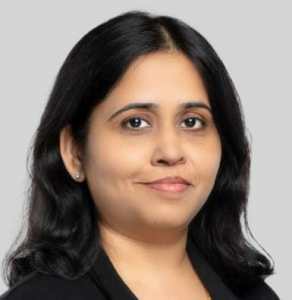
When Sudha Gorti, Senior Delivery Agile Program Management at Publicis Sapient, talks to young women considering a career in STEM, she often hears them express doubts about their abilities. “They may think their strengths lie in being social and enjoy working with people, but they believe STEM is for ‘geniuses’ and too challenging,” she says. Sudha is quick to challenge this misconception, emphasising that these very strengths—curiosity, problem-solving, and collaboration—are what make women particularly suited for success in STEM careers.
“A common misconception is that STEM careers are isolating or purely technical,” Sudha explains. “In reality, collaboration is essential, and this is where women truly excel. Women are natural team players, eager to seek help and offer support. STEM isn’t about working alone; it’s about diverse minds coming together to drive progress.” Sudha believes women have always played a pivotal role in building strong communities, and this quality is invaluable in STEM environments.
Another misconception, Sudha adds, is that you need to be a ‘genius’ to succeed in STEM. “STEM careers are built on curiosity, problem-solving, and perseverance. Women’s natural curiosity leads them to ask insightful questions and seek understanding, fuelling innovation in science and technology,” she explains. “Problem-solving is what engineers do every day, and women are already equipped with the mindset needed for that.”
For any woman questioning if she belongs in STEM, Sudha reassures, “STEM is about making a difference. If you’re curious, resilient, and eager to learn, you’re exactly what the field needs.”
Sudha credits her success in STEM to an unexpected trait—competitiveness, shaped by her passion for analysing sports. She spent hours breaking down games, player performances, and strategies, which honed her analytical mindset, proving invaluable in STEM.
Growing up competing in swimming, badminton, and interschool March Past competitions taught Sudha discipline, resilience, and the drive to improve. “In sports, setbacks are inevitable, but you learn to push through, strategise, and come back stronger,” she says, a mindset that applies perfectly to STEM.
Sudha’s love for solving puzzles also plays a key role in her success. “STEM is about problem-solving—finding patterns, troubleshooting, and fitting pieces together to solve challenges,” she explains. The thrill of solving tough problems keeps her motivated.
These qualities—competitiveness, analytical thinking, and problem-solving passion—have helped Sudha thrive in STEM. “They’ve taught me to embrace challenges, think critically, and enjoy the discovery process.”
Ink Dive: 11 Years On, POSH Still a Checkbox: Pallavi Jha Calls for Transformative Reforms at Workplace
 Mamta Sharma is a freelance journalist committed to sharing stories on talent management, DEIB, workplace culture alongside narratives on leadership, entrepreneurship, tech innovation and employee wellbeing.