



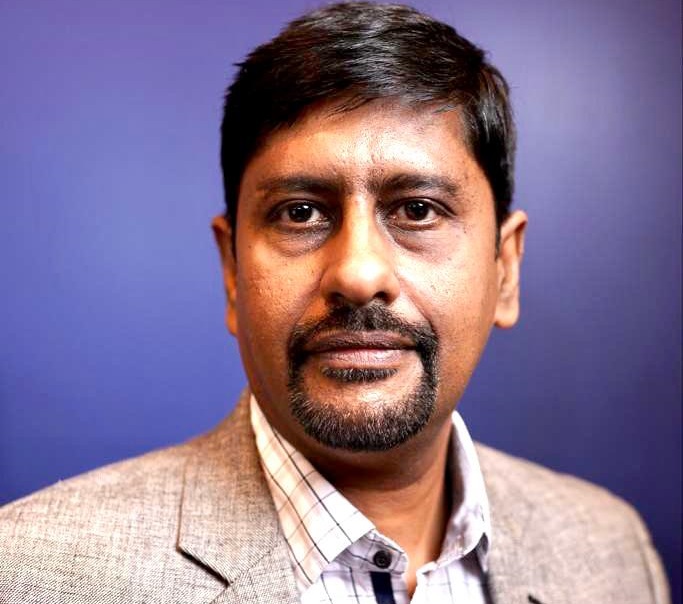
 Ganapathi Subramanian, CHRO, Sundaram Home Finance
Ganapathi Subramanian, CHRO, Sundaram Home Finance, talks about the organisation’s introduction into a new market segment small ticket lending and the talent challenges it posed in 2023.
Could you provide an overview of Sundaram Home Finance's growth trajectory and how have you navigated the evolution of talent within the industry?
Certainly. Sundaram Home Finance, a part of the Sundaram Group, has experienced significant growth in the past three years. Sundaram Group, from its inception, expanded its business across diverse sectors, including Non-Banking Financial Companies (NBFC), mutual funds, insurance, business support services, and IT solutions. Sundaram Home Finance Limited, established in 1999 in response to customer demand, has carved its niche in the Home Finance sector. Despite a challenging market where only a few companies exceed Rs 10,000 crore in Assets under Management (AUM), we've made our mark, although we're relatively small in scale compared to others.
We pride ourselves on being a people-centric organisation, which is pivotal in an industry where attrition rates range from 40 to 60 per cent. We've approached this challenge by focusing on talent retention and development, viewing it not just as a hurdle but as a critical aspect of our growth and sustainability in the competitive Home Finance landscape.
Considering Sundaram Finance's history of over 70 years and an additional 23 years in the Home Finance unit, how has the talent management and acquisition approach evolved during this period?
Reflecting on our history, Sundaram Finance's journey began with a humble team with a few hundred employees but expanded to 1000 branches across the group. I experienced the values in which the group was built even when there was very little competition, when I joined the group as Head HR way back in 2014.
To talk about our TA process, just as we maintain transparency with our customers, avoiding hidden charges and being straightforward, we apply the same principle to talent acquisition. We've encountered numerous talented individuals whom we admired but did not pursue due to a potential mismatch in terms of cultural fit within our Companies. It's been about nurturing and strengthening our HR foundation year after year, ensuring that those we bring on board align with our values and ethos. This approach has been a cornerstone of our talent management strategy, reflecting our commitment to both the integrity of our operations and the well-being of our employees.
This year brought new challenges as we ventured into small ticket lending, a sector we hadn't explored in the past two decades. The main challenge was finding the right talent for this niche tire 3, tire 4 market, where credit underwriting extends beyond standard credit reports.
Can you elaborate on how the discussions and strategies around talent have evolved at Sundaram Home Finance over the years?
Our journey at Sundaram Home Finance began modestly, with just a few branches in the South, before expanding Rest of India. In our early days as a startup, with around a hundred employees, there was a strong sense of family. Every employee was known personally, and as we expanded, now reaching nearly 1400 plus employees, this close-knit ethos remained a core part of our culture.
We don’t pigeonhole into specific roles based on their initial function, we at Sundaram Home Finance encourage our employees to understand and engage with the entire business. This approach allows employees to move across departments and choose functions that align with their interests and aspirations, fostering meaningful growth beyond mere job titles. As a result, our employees often choose to stay with us, valuing the comprehensive learning and growth opportunities we offer.
During the pandemic, while many companies cut salaries, incentives, and bonuses, we chose a different path. We continued will all employee benefits, and even provided increments and promotions, highlighting our commitment to our workforce. Additionally, we've been ahead of the curve in HR practices, offering extended maternity sabbaticals since the early 2000s, well before they became the norm.
In terms of technology, we've embraced data-driven approaches, yet we ensure that our people remain at the heart of whatever we do. Our philosophy is to mine data with a human touch, prioritising our employees' well-being and professional development in every decision we make.
Also read: IIFL Home Finance’s Lean Workforce Model Boosts Profitability; Head HR Rashmi Priya Explains How
Considering the influx of new entrants in the HFC sector since 1999, how do you perceive the competitive landscape has evolved in recent years?
The Home Finance Corporation (HFC) sector has indeed witnessed a significant influx of new entrants, making the market increasingly competitive. As per the National Housing Bank portal records, there are now 83 active companies in the market. This includes a variety of startups and smaller to mid-sized companies, many of which have less than 1000 AUM.
In this crowded landscape, the key is to discern whether one is in for a short sprint or a long marathon. At Sundaram Home Finance, we firmly believe in the marathon approach. We focus on sustainable, long-term growth rather than short-term gains. This philosophy extends to how we view our brand ambassadors, we consider our employees to be our true stars. They are the face and the driving force of our brand, representing our values and commitment to service. This employee-centric approach not only differentiates us in the market but also aligns with our long-term strategy in the competitive HFC sector.
How do you ensure that your employees remain committed to Sundaram Home Finance?
In the face of industry competition, especially regarding the talent pool, we focus on two main aspects to retain our employees: monetary and non-monetary incentives. While monetary incentives can be a strong motivator, leading some to frequently switch companies, we believe in the lasting impact of non-monetary benefits. These benefits may yield results more gradually, but they are instrumental in fostering long-term loyalty and job satisfaction.
One of our most effective strategies is sharing success stories within our organisation. We often have employees who, having left Sundaram Home Finance, choose to return. Their experiences and reasons for returning serve as powerful testimonials to our current staff. It's more impactful when these stories come from their colleagues, as it creates a more relatable and persuasive narrative.
Moreover, we emphasise growth and development within our Companies. By illustrating the career progression of our employees and comparing it to those who have moved to other organisations, we highlight the long-term benefits of staying with us. This approach not only reinforces our commitment to employee growth but also showcases the value we add to their careers, which often outweighs the short-term gains offered elsewhere."
As we move through 2023, what are some of the talent-related challenges Sundaram Home Finance has encountered, particularly with your recent venture into small ticket lending?
This year brought new challenges as we ventured into small ticket lending, a sector we hadn't explored in the past two decades. Our founder Chairman Sri T. S. Santhanam believed it was crucial to support non-bankable customers with small businesses, leading us to initiate a pilot Small Ticket Lending (STL) in several small towns. We successfully launched STL around 30 branches this FY, but this expansion posed unique challenges in talent acquisition and integration.
The main challenge was finding the right talent for this niche tire 3, tire 4 market, where credit underwriting extends beyond standard credit reports. Opening two to five branches in these new markets meant bringing in professionals who not only understood our philosophy but could also adapt to our distinct approach. The integration process was complex, especially for those accustomed to incentive-driven cultures and fixed workplace locations. Our philosophy encourages mobility and diverse cultural interactions, which is vital for developing long-term talented employees in sales roles.
Another aspect was understanding the competition and strategically hiring from the same talent pool. We did internal talent realignment, moved some existing employees to these new roles, and brought in new hires from competitors. This approach required developing unique engagement policies to ensure these new hires were aligned with our Companies' values and goals. We've observed lower attrition rates among these hires compared to industry standards, which is promising.
Also read: Max Life CPO Shailesh Singh Discusses Evolution of Hiring Models in the BFSI Sector
For your pilot module in small ticket lending, what specific types of hiring and niche skills were you focusing on?
For the pilot module in small ticket lending, our primary strategy was to hire locally. This approach was crucial because local hires inherently understand the geography and language of the region, which is vital for this business. For instance, in places like Theni, Erode, or Kancheepuram, there's a wealth of talent, but the challenge lies in finding those who not only fit the skill requirement but also align with our culture and business model.
Selling home loans in these regions requires a deep understanding of the local business environment. Our focus on small-ticket lending targets loans of Rs 7-8 lakh, occasionally reaching 3-4 lakhs less or more, demanding a specialised set of skills tailored to this segment. Continuously training these local hires on our credit policies and the nuances of the business was one of our key responsibilities.
We've recognised that while talent is readily available, creating a unique selling proposition (USP) for them in our Companies is essential. Since Sundaram Home Finance has been operational for two decades, and this venture is relatively new, addressing potential apprehensions about the business's success was a part of our HR strategy. We often must clarify our long-term vision to potential hires, emphasising that we are looking for individuals seeking long-term employment and growth, which is a cornerstone of our Companies' ethos.
Considering that the small ticket lending business operates like a startup within Sundaram Home Finance, how did you go about building a team to support this new venture?
Indeed, the small ticket lending division has evolved like a startup within the broader structure of Sundaram Home Finance. Initially, we envisioned managing this venture with our existing team, anticipating a smaller scale operation. However, as the project unfolded, we quickly recognised the need for a more robust and specialised team due to the scale and complexity of the activities.
Consequently, we decided to appoint a separate business partner specifically for the small ticket lending segment. Alongside this, we're also focusing on strengthening our operational and training aspects to better equip the team. This expansion saw our team grow beyond 200 members, a number we hadn't anticipated at the outset. By adapting to the requirements and the scale of this new venture, we are ensuring that the team is not only adequate in numbers but also proficient in handling the unique challenges of small ticket lending.
Also read: Tier 2, 3 and Rural Cities to Drive BFSI Talent Demand: Ruhie Pande, Godrej Capital
After evaluating the pilot project in Tamil Nadu, what are your next target locations for expansion, and how does this tie into your overall lending strategy?
Following the insights we've gathered from the pilot project in Tamil Nadu, we may plan to extend our reach to the states of Telangana and Andhra Pradesh. We're keen to explore these areas as part of our testing phase. Additionally, we've commenced a pilot project in affordable lending, which is another crucial segment for us. Unlike Small ticket lending, which generally targets loans around Rs 3 lakhs to 15 lakhs, affordable lending typically falls in the range of Rs 20 lakhs to Rs 40 lakhs, making it suitable for tier 2 and tier 3 cities where affordable housing and flats are more prevalent.
We've noticed several parallels between affordable lending and small ticket lending, particularly in terms of the customer base, which mainly consists of business owners, first-time salaried employees, or fresh graduates. While prime lending remains a key driver for our growth, diversifying into affordable and small ticket segments is essential for our growth and profitability. In these segments, we deal with smaller loan amounts, but the volume of customers compensates for this. This balanced approach allows us to maintain a healthy Asset Under Management (AUM) while catering to different market needs and customer segments.
What would be your hiring ambitions this year and what kind of skills are you looking for?
This year, our hiring strategy at Sundaram Home Finance is focused on a mix of niche and common skills. In terms of niche skills, we've been integrating roles that specialise in projects and analytics, recognising the growing importance of data-driven decision-making in our sector. However, when it comes to the broader housing market, the skill set we seek remains more generalised and customer-centric.
A critical aspect is understanding property valuation and effectively engaging with customers. With customers increasingly conducting their research through online platforms before engaging with us, our team needs to be well-versed in addressing their informed queries and guiding them through the decision-making process. Many customers are often unsure about what kind of property they need, so our role involves more than just facilitating transactions – it's about advising and helping them make the best decision for their needs.
This customer-focused approach, combined with our expertise in understanding property values and market trends, forms our unique selling proposition (USP). It's about striking the right balance between specialised and common skills to effectively cater to our clients' diverse needs and preferences in the housing finance sector.
Could you provide an estimate of how many individuals Sundaram Home Finance aims to hire this year?
For the current year, we have set a target to hire around 400 employees at Sundaram Home Finance. To put this in perspective, our employee base was around 750 three years ago, and now it has grown to over 1,400. So, while our base may seem small, this hiring target represents a significant increase in terms of percentage. However, it's important to note that our focus isn't just on the number of hires, but on finding the right fit for our Companies' culture and values. This approach is similar to that of mature companies, which prioritise keeping a position vacant overfilling it with the wrong candidature. Often challenge lies in connecting with the right individuals who align with our ethos and can contribute meaningfully to our team.
We've recognised that while talent is readily available, creating a unique selling proposition (USP) for them in our Companies is essential. Since Sundaram Home Finance has been operational for two decades, and this venture is relatively new, addressing potential apprehensions about the business's success was a part of our HR strategy
Regarding your expansion into affordable housing with plans to open new branches, could you elaborate on the planned locations and your hiring strategy for these areas?
We're expanding in affordable housing, aiming to open 10-12 branches this / next year, focusing on the TN, AP & TS regions. Hiring will center on tier-2 and tier-3 cities, leveraging local insights for market and business understanding. This strategy aids our business, especially when relocating managers to new areas, ensuring adaptation and success in these new territories.
Moreover, we've revamped our engagement model and performance management systems to focus more on the quality of learning rather than just the quantity of man-hours. Our Performance Management System – Sundaram Performance Appraisal System (S-PAS) is uniquely designed to value effort, not just results, giving employees the motivation and recognition for their hard work, even if they fall short of their targets. This system is integrated with our learning programs, ensuring that our employees are continually developing and improving.
We also prioritise deep engagement practices. For example, we facilitate opportunities for our first-time managers or field officers to shadow high-performing branch managers, aiding their professional growth and transition into managerial roles. These practices extend to providing tailored assessments, small assignments, mentorship opportunities, and both career and succession planning. This holistic approach to employee development and engagement is a cornerstone of our strategy, ensuring that we genuinely invest in our employees' growth and success.
About the expert: Ganapathi Subramanian is an experienced HR professional with a rich background in Talent Acquisition, Engagement, Development, and HR Analytics. His career spans notable companies like TVS, PepsiCo, and Britannia, where he's played a key role in shaping HR strategies and practices.




Ganapathi Subramanian’s insights on addressing the talent challenges in the small ticket lending segment with Sundaram Home Finance are incredibly enlightening. As the industry evolves in 2023, his strategies for talent management in this specific niche shed light on innovative solutions. The focus on resolving the talent conundrum reflects the commitment to sustainable growth and excellence within this sector.”
This comment acknowledges the value of Ganapathi Subramanian’s expertise in addressing talent challenges within the small ticket lending segment while highlighting the significance of his insights for the industry’s progression in 2023.
Please Visit:https://rozgar.com/fresher-jobs
Very insightful Ganapathi Subramanian ,thanks for sharing the commendable growth trajectory and strategic approach to talent management. The emphasis on transparency, cultural alignment, and an unwavering commitment to employee well-being reflects a holistic and forward-thinking leadership. The company’s proactive strategies in navigating challenges, such as entering new markets and segments, showcase a dynamic and adaptable business mindset. Very well articulated.