


Factories are shutting down, once-bustling industrial zones are falling silent, and thousands of workers are being forced to pack their belongings with little certainty about their future. Indonesia is facing one of its most severe waves of mass layoffs in recent years, with job cuts sweeping through key industries like textiles, electronics, and manufacturing.
The impact is staggering, nearly 13,000 workers have already lost their jobs in the first quarter of 2025.
With economic pressures mounting and global demand slowing, the fear of even larger layoffs looms over the country. In response, the Indonesian government is rolling out urgent measures to cushion the blow, offering financial aid, retraining programs, and industry support in a bid to stabilise the workforce and prevent a deeper crisis.
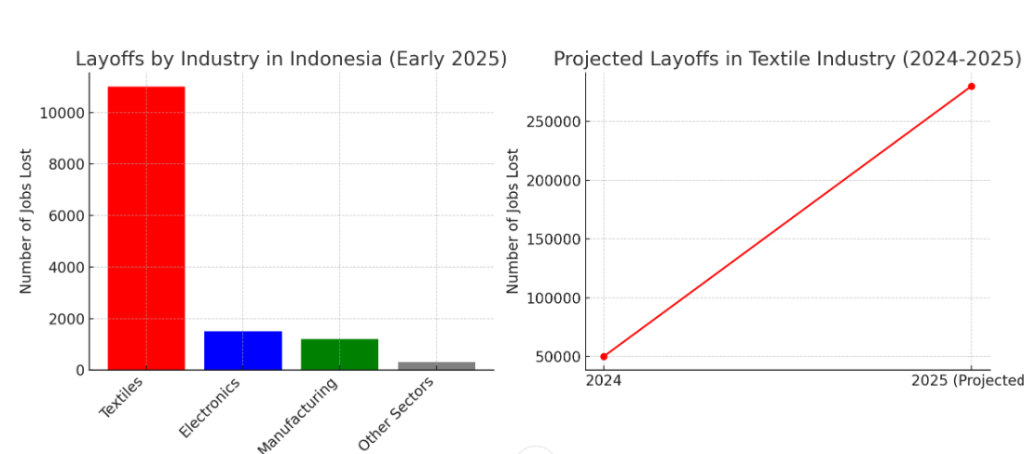
- The textile sector has been particularly affected, with the bankruptcy of PT Sri Rejeki Isman Tbk (Sritex) alone resulting in nearly 11,000 layoffs.
- The electronics sector also saw major setbacks, as Yamaha Music Indonesia and Sanken ceased operations, further adding to the unemployment crisis.
By early 2025, layoffs had already surpassed 13,000 workers, following an alarming trend from 2024, when job cuts in the textile industry soared to 50,000. Experts warn that the situation could worsen, with up to 280,000 textile jobs at risk in the coming months.
To mitigate the impact of these layoffs, the Indonesian government introduced the Jaminan Kehilangan Pekerjaan (JKP) or Job Loss Insurance program. Effective from January 1, 2025, this initiative provides laid-off employees with 60% of their wages for up to five months, along with a 2.4 million IDR training allowance and access to skill-enhancing programs. Approximately 3.76 million workers across 110,000 companies are expected to benefit from this scheme.
Ink Dive: DBS Group to Reduce Workforce by 10% in 3 Years, Affecting Contract and Part-Time Workers
The future appears uncertain for many Indonesians, but these measures may offer a glimmer of hope for now.