

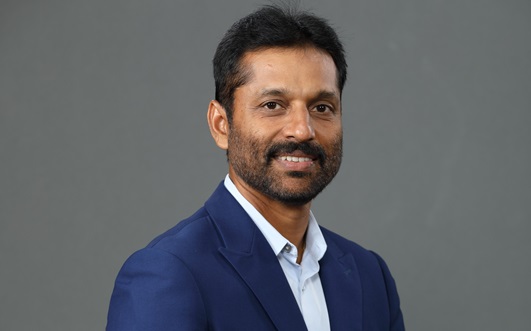
 Shaji Mathew, Group Head HRD, Infosys
Will the tech sector see an upswing in hiring this year? Infosys’ Group Head of Human Resource Development, Shaji Mathew emphasises the possibility of inclusive and specialised skills including adaptability and agility.
Post a tepid 2023, many reports suggest that tech sector hiring will see an upward trend this year. What is your analysis of the trend? Do you think this hiring will be more around niche or specialised skills?
The future of work is centered around skills – a trend that was highlighted by the Covid-19 pandemic. The world will always need creators and consumers of technology. To stay relevant, businesses must invest in nurturing both types of employees. While technical skills are undoubtedly crucial, there is also a growing appreciation for individuals who demonstrate adaptability and agility in learning. Skills such as resilience and effective communication, too, will see a surge in demand. At Infosys, we categorize skills into three horizons – Skills of Yesterday (Past), Skills of Today, and Skills of the Future. This three-tiered approach enables us to continuously recalibrate and refine our skills focus. Generative AI is increasingly transforming the way we look at work, the workforce, and the workplace. As such, the demand for ‘full stack’ engineers, who have a comprehensive understanding of all aspects of technology, is set to increase exponentially.

How is the rapid emergence of newer technologies impacting the traditional skill sets required for a role in an IT company? How do you see this evolving further?
As industries are being reshaped by innovations and competition gets fiercer by the day, organisations must equip their teams with the skills necessary to ride the waves of the latest technological advancements. Reinventing itself in step with the technologies and trends relevant to its business is now a necessity for every organisation. Addressing this need calls for a systematic approach. At Infosys, we skilling our employees to help them become AI-ready by integrating Gen AI courses with our Foundational Training as well as continuous learning across the board. Fundamentally, generative AI is disrupting how businesses should organize themselves. We believe success in deriving the most from Gen AI hinges on formulating and executing an AI-first talent strategy, complemented by a dynamic, skill-based framework.
Infosys is continuing with its hybrid work model. What have been your learnings so far? Where do you think this work culture is headed?
Infosys has followed a very flexible approach with regards to return to the office and the feedback from our employees has been very positive. We are seeing a wave of employees voluntarily coming to work as they see value in working from the office, in hybrid mode. We have also opened offices closer to where our employees are based this year, for example, in Vizag, Indore, Nagpur, Hubballi, Coimbatore, Kolkata, and Noida.
However, working in hybrid mode, where a significant portion of our workforce consists of new members, it was vital for all employees to embrace and carry forward the Infosys culture. For this, Infosys launched the ‘Infosys Way of Life’ (#IWOL), an organisation-wide campaign to take forward its collective determination to nurture and sustain the essence of its culture. Culture stands as a powerful differentiator and a driving force behind our collective achievements, and IWOL has assumed paramount importance in fostering a cohesive cultural identity.
Our employees tell us that they join us for a value proposition that is centered around digital careers, impactful skilling opportunities, and a culture that resonates with their purpose. They see us as a value-driven, sustainable, and inclusive organisation. Our employee-first culture drives us to consistently improve employee experience and sustain superior performance, which ultimately serves as our competitive advantage in an industry where services are relatively easily replicated.
Do you think a complete return to work will alter the gender diversity numbers in terms of women's participation in the workplace? Remote or hybrid work was seen as a great medium to help many women return to work in a big way.
Being an organization that aims to achieve 45% female representation in the workforce by 2030, we have developed a focused approach that addresses the various personal and professional milestones that women navigate while pursuing a career. We are committed to strengthening the ‘career intentionality’ of our women employees - right from when they start working with us as engineering graduates. Our strong return to work program ensures that women are provided with adequate support to return to work post their parental / career breaks. The ‘Restart with Infosys’ program has components of skilling, mentoring, and live project experiences to enhance their readiness to resume their careers effectively. Other practices like sabbaticals and flexible working options enable both men and women to navigate their personal commitments while staying focused on their careers. As of December 31, 2023, the share of women workforce at Infosys stands at 39.3%.

While women's participation is important, how is Infosys ensuring the DEI initiatives go beyond just one gender?
Our view is that helping our employees feel safe and feel a sense of belonging at the organization, irrespective of individual differences is crucial to the diverse, inclusive workplace we are building for today and the future. Our goal is to create a workplace culture that will ensure every employee shows up authentically, as their full selves, in a professional setting contributing to the purpose as well as enjoying what they do. We are committed to nurturing an inclusive workplace for our employees. Our organisational culture is one that advocates ‘respect for all’ nurtured through inclusive policies, allyship and holistic wellness programs that include emotional assistance. Our vibrant employee resource group - iPRIDE – makes diversity and inclusion more intentional through education, communication, and mentorship interventions. We are also a signatory to the UN Standards of Conduct for Business Tackling Discrimination against Lesbian, Gay, Bi, Trans, and Intersex People.
Workplace accessibility is at the heart of an inclusive ecosystem. We are proud that people with various disabilities choose to work at Infosys. Our employees with disability have access to roles across various domains within the organization. Additionally, in December 2022, we launched an internship program to strengthen the talent pool of qualified persons with disabilities. This six-month internship program includes a combination of self-paced learning, leveraging our global learning platform, Infosys Springboard, mentoring by experts from a variety of technical domains in the organization and opportunities to apply this learning.
Which trends do you feel will take over 2024?
Against the backdrop of evolving business environments and regulations, and a global tapestry of talent, we shall see some transformative trends and shifts wherein the fundamentals of work, workforce, and workplace will be redefined. There will be a close interplay of technology, agility, and commitment to inclusivity, underlined by a strong and enduring culture.
Redefining HR as a business function: Having been in the industry for over three decades and observing business closely, I cannot emphasize strongly enough why HR should be a business function, and not merely a ‘business enabler’ function. The focus of HR should extend beyond routine functions to include agility, collaboration, and engagement in critical business endeavours that impact the most important metrics for the organization. From simplifying processes to contributing to complex deals, HR needs to be proactive in ensuring organizational readiness for any challenges that may lie ahead.
Improving workplace experiences by leveraging technology: The increasing integration of AI in HR will help streamline many processes, ranging from recruitment to employee support. The key is to ensure the ethical implementation of AI, abide by organisational guidelines and global standards, and ensure that privacy is respected. Going ahead, we shall see a close and harmonious interplay of humans and technology in introducing AI-driven solutions, celebrating significant moments, enhancing managerial effectiveness, and fortifying employer branding.
Accelerating careers: In the global context, it is vital to envision HR as a catalyst for career growth. Identifying high-performing individuals and providing them with accelerated career opportunities is not just a strategy but a personal commitment. Understanding the unique aspirations of every employee and adopting a personalised approach to career development ensures that everyone’s journey is aligned with their potential.
Fostering inclusivity: In the coming year, commitment to diversity, equity, and inclusion (DEI) should take centre stage. In addition to implementing policies conducive to DEI, we should encourage open conversations, organize regular training, and create an environment where every voice is heard and celebrated. Recognizing and respecting the richness of local cultures within the global community is integral to fostering true inclusion and creating a workplace where diversity is not just acknowledged but embraced.
Making culture a way of life: In the post-pandemic era, with employees seeking greater flexibility in their work arrangements, how organizations approach the return to the workplace has become a significant part of the workplace narrative. As we navigate the aftermath of ‘the great resignation’, the influx of new talent is a pivotal opportunity to assimilate individuals into the fabric of our organizational culture. As we look to the future, we must recognise that culture is not a standalone component but the driving force of the way of life in the organization.
About the author: Shaji Mathew has over 30 years of experience in Infosys. Before his current role, he was Infosys’ global head of delivery for Financial Services, Insurance, Healthcare and Life Sciences.