

As Wayfair India TDC is making inroads into the subcontinent, we have Mitalee Dabral, the spirited Country HR Head sharing her journey from a bustling team of 100 to a robust 380 in just eight months. From the nitty-gritty of talent acquisition in the tech-driven landscapes of India to the ethical quandaries of AI in HR, Mitalee brings a fresh, no-nonsense perspective to some of today's most pressing HR challenges. Moreover, she elucidates on empowering women in leadership roles. Join us as we explore the ups and downs of an industry veteran who's not afraid to keep it real!
Q) Considering your relatively recent transition to Wayfair, could you elaborate on any noteworthy experiences or key events that have left an impression on you during your tenure thus far?
A) It certainly feels like it's been two years, though it's only been eight months since I joined Wayfair. When I started, the company had about 100 employees, and now we've grown to 350, with an additional 30 interns bringing our total to 380. We've experienced tremendous growth, which has been a highlight of my career so far. We've consistently met our hiring targets each quarter, which is a testament to our steady expansion. The hiring landscape in India has also played a significant role in facilitating this growth. Compared to last year, there has been a noticeable slowdown in tech hiring, with a 20-21% decline observed across industries. This lull has somewhat advantaged Wayfair's Technology Development Center (TDC) expansion in India, allowing us to attract talent more easily due to reduced competition. However, the market is picking up again; bigwigs like TCS, Wipro and Infosys are ramping up their hiring, and we are also seeing product-based startups beginning to thrive in niche areas. Navigating and contributing to the steady growth of the TDC has certainly been a high point for me.
Q) And how has the journey been?
A) The journey has been remarkably smooth. Wayfair India TDC operates like a startup, yet it's cocooned within a much larger organisation. While Wayfair is a household name in the US e-commerce furniture market, we are still in the process of building our brand in India, particularly from a technological perspective. The advantage of being part of a larger organisation is that it's relatively easier for us to transfer learnings, whether they be policies, processes or the culture we aim to cultivate. This existing framework makes it unnecessary for me to reinvent the wheel.
From an HR perspective, systems such as performance management and employee lifecycle events are already established, making it straightforward to adapt these practices as we expand in the subcontinent. However, a notable challenge lies in establishing our brand in terms of Employer Value Proposition (EVP) within the tech market in India. That's an ongoing journey for us, and interactions like these are immensely helpful and something I'm keen to leverage. Overall, it has been a fascinating experience internally.
Q) Let’s talk about diversity in STEM. Can you discuss any initiatives or partnerships Wayfair has undertaken to support STEM education and empower diversity in technology in India?
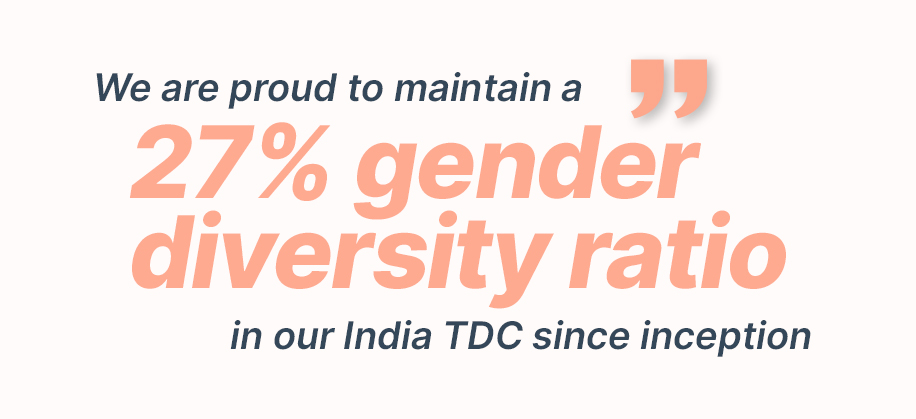
A) I’d love to answer that, particularly because Wayfair stands out as an organisation where female leadership is prominent, with women holding key positions in our C-Suite such as our CTO and CFO. We have CPOs heading the technological verticals that are led by women. We are proud to maintain a 27% gender diversity ratio in our India TDC since inception, and we aim to exceed this figure as we expand. Wayfair is deeply committed to Diversity, Equity and Inclusion (DEI) globally, and we take pride in our numbers.
One significant practice I've implemented at Wayfair is monitoring the recruitment funnel, which has proved invaluable. We meticulously track diversity metrics from sourcing to recruitment, identifying areas for improvement and course correction. This approach extends to various lifecycle events, including promotions and performance management, to address issues such as pay equity gaps. This systematic tracking and monitoring, a practice we follow globally, has been instrumental in our success.
Another priority is attracting and retaining women in tech roles. At India TDC, we've introduced candidate engagement calls with senior women leaders for prospective female hires. This initiative has resulted in nearly 100% conversion of women candidates who receive offers, underscoring Wayfair's appeal as a supportive workplace for women leaders.
Additionally, we've established resource groups within the organisation, such as 'Women in Tech,' which foster a sense of community and support. Through local chapters and global initiatives, we facilitate knowledge sharing, mentorship sessions, and interactions with global leaders like our CTO and CFO. These platforms provide invaluable role models and reinforce our commitment to DEI.
Q) In your experience, what are the key challenges women face in leadership positions, and how does Wayfair address them?
A) There are indeed numerous challenges that persist, and one of the most glaring is the scarcity of female role models. Globally, and especially in India, the dearth of women leaders is palpable – you can count them on your fingertips. This lack of representation can have profound effects on young women leaders. When they don't see women in leadership roles, they begin to question whether organisations truly value promoting women based on merit. This leads to what we call 'second-generation gender bias,' where doubts arise about the seriousness of organisations regarding women's careers. Additionally, many women experience Imposter Syndrome, questioning their worth and attributing their success to diversity targets rather than their own merit. Overcoming these self-doubts is crucial for women to progress in their corporate journeys.
Another challenge is the need for a nurturing environment in corporate spaces, especially considering the various life stages women go through. Support is essential, particularly during childbearing years, requiring amenities like creches and flexible work environments. Organisations must provide avenues to navigate these challenges seamlessly. At Wayfair, we strive to create a thriving and diverse environment, evident in our support for women through initiatives such as flexible creche timings, maternity policies, etc. Inclusivity should be a standard checklist for all organisations.
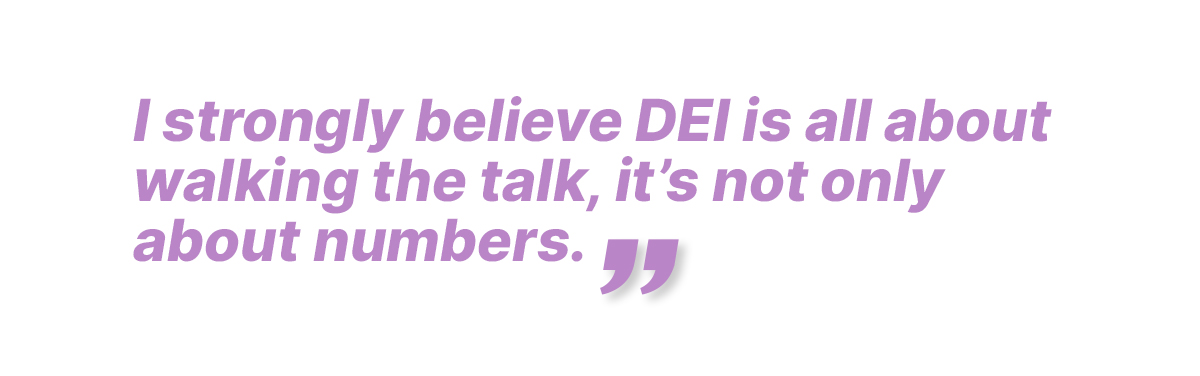
I strongly believe DEI is all about walking the talk, it’s not only about numbers. You should have women leaders who are spokespersons of your organisation. When a female candidate hears positive feedback about Wayfair from a woman leader, it denotes a significant win in the battle for true inclusivity.
Q) Steering this conversation towards AI, what role does Generative AI play in shaping Wayfair's talent strategy, particularly in the context of its operations in India?
A) We've begun recruiting for AI and ML roles at Wayfair India TDC, and we're in the process of setting up a dedicated team. It's a niche skill set and not easy to hire for, but it's an exciting path we're on. As HR professionals, we need to upskill ourselves to effectively leverage Generative AI. I see enormous potential for it to streamline certain routine tasks, such as enhancing our Applicant Tracking System (ATS) capabilities. Tasks like writing job descriptions, candidate screenings and job matching could all be automated, taking our processes to the next level.
However, there are valid concerns surrounding data security and ethics, particularly regarding HR analytics. With vast amounts of data being processed by these tools, ensuring compliance and preventing violations will be paramount. Additionally, there's an ongoing discussion about Generative AI lacking emotional quotient (EQ) and empathy. It will be interesting to see how technology evolves to address these aspects.
It’s going to be an exciting moment of epiphanies plausibly in the next year or two where we will see some wonderful developments in the AI space.
Q) You spoke about Gen AI lacking EQ and cybersecurity concerns. Could you elaborate on how Wayfair ensures ethical and unbiased use of AI in its HR practices processes such as performance evaluation and promotion, and at the same time address concerns around job displacement due to AI adoption?
A) There are no perfect answers yet, as it's a constantly evolving landscape. We aim to enhance areas where we can reduce human inefficiency and make routine, transactional jobs more effective. However, there's no denying the potential of this technology to automate aspects of HR we previously believed only humans could handle. It's a fascinating area to monitor. Looking ahead, the role of talent could dramatically change within the next decade due to AI. Many HR and talent-related jobs are at risk as technology advances. From my personal observation, it's thrilling yet sobering to see how HR roles will evolve with this technology, as many manual tasks are already being automated.
Q) What’s leading to the massive layoffs in the tech sector post-COVID? A website tracking these layoffs reports that in 2023 alone, over 263,000 employees from nearly 1200 companies were given marching orders. A major reason emerging is that organisations couldn't anticipate their staffing needs and had to make cuts. How can so many organisations not be prescient about this?
A) It's true that one major reason cited for these layoffs is companies hiring without a strong plan in mind. However, I believe there are broader factors at play. Over the past few years, the global economic landscape has been heavily impacted by events such as the pandemic and ongoing wars, which have continually disrupted economic stability. This instability has undoubtedly influenced organisational decisions regarding workforce planning.
Additionally, the rapid pace of technological change, particularly in sectors like tech, has created a demand for specialised skills such as AI, ML, and cybersecurity. Unfortunately, the talent pool with these skills isn't always readily available. It raises questions about the alignment between industry needs and the skills being taught in educational institutions. Are graduates equipped with the relevant skills needed in today's job market?
Investment in talent readiness is crucial, both from the perspective of educational institutions updating their curricula and organisations providing opportunities for self-growth and upskilling to their employees. Without adequate alignment and investment in talent development, the risk of redundancy increases over time. So, while overhiring may be a factor in some cases, it's essential to consider the broader context and address systemic issues contributing to workforce challenges.
Q) What according to you should organisations ensure that remaining employees feel supported and motivated during this period of change?
A) I believe that employee motivation and engagement extend far beyond the terms of an employment contract. Establishing an emotional connection with the organisation is crucial. It's widely acknowledged that when employees depart, it's not solely due to compensation. While compensation may be a factor, numerous other reasons for disengagement prompt employees to seek new opportunities. It's essential to strike the right balance with employees from the outset, focusing on principles, values and organisational culture. This aspect is often overlooked, particularly in startups, where the realisation often comes too late that the culture needs adjustment. By prioritising a positive culture early on, organisations can create a strong bond that encourages employees to stay longer, feeling valued, heard, and cared for.
Startups sometimes rush to offer a multitude of benefits, only to scale back when funding is lost. I advocate for meaningful, sustainable investments that demonstrate a long-term commitment to employee development. Providing opportunities for upskilling is crucial, but it must go beyond lip service. Employees should receive genuine benefits from developing their skills, with initiatives reflecting a genuine intent for their professional growth. Sustainable benefits that endure beyond short-term financial fluctuations foster a sense of stability and investment in the workforce.

Q) Any concluding remarks before we bid adieu?
A) From a talent perspective, prioritising employee care and promoting ownership should be at the top of our agenda, though it's often easier said than done. It's crucial that we show genuine care through the policies we implement within our organisations. Avoid mere lip service at all costs — it's better to do a few things exceptionally well and with sincere intent. Ultimately, fostering a genuine human connection is key.
Mitalee Dabral, country HR leader, is an HR professional with over two decades of HR experience across leading organisations and startups. She joined Wayfair from ShareChat, where she created and led a high-performing HR team along with effective people policies and initiatives. She is a TISS alumnus and an HR professional with over 20 years of HR generalist experience in Human Resources across leading organisations in India. She has held diverse leadership responsibilities as a strategic HR Business Partner to support business agendas and create high-calibre HR teams.