


India's fintech industry has experienced exponential growth over the past decade and is now one of the largest ecosystems globally. As of 2024, the Indian fintech market is valued at over $50 billion and is projected to reach $150 billion by 2025, with a CAGR of 20 per cent. Despite this rapid expansion, women continue to be underrepresented in senior roles, particularly in core technology and leadership positions. As the sector is diverse and evolving, women need to pursue sustained growth. This is not only important for achieving gender balance but also for fostering innovation, inclusion, and long-term industry success.
Structured mentoring programmes, leadership development initiatives, and the support offered by Employee Resource Groups (ERGs) are among the most effective strategies for enabling women in fintech to thrive. These mechanisms can strengthen women’s participation in the workforce and increase their presence in leadership positions.
Mentorship: A Critical Catalyst for Growth
Mentorship plays a pivotal role in professional development, especially in industries where women often navigate unfamiliar paths. In India, many female professionals are first-generation technology workers or have limited access to role models in leadership.
A mentor who understands the unique challenges of the sector can provide invaluable guidance on career decisions, technical skill-building, and strategic advancement. Mentors help women to build self-confidence, expand their professional networks, and develop resilience in high-pressure environments.
According to the 2023 NASSCOM report, companies with structured mentorship programmes recorded a 25 per cent higher retention rate among women and a 30 per cent rise in female representation in mid-management roles over three years. Several India-based studies and thought leadership platforms also indicate that structured mentoring not only improves retention but accelerates the readiness of women for leadership positions in fintech.

Bridging the Gender Gap through Leadership Development
While women’s representation at the entry level in fintech is gradually improving, gender disparities become more pronounced at the middle and senior levels. Leadership development programmes are crucial in addressing this gap. Targeted initiatives such as technical upskilling, role rotations, and access to decision-making forums can help women transition from individual contributors to strategic leaders.
Tailored leadership development also plays an important role in addressing unconscious biases. It enables women to build presence and authority in spaces where they may be underrepresented. Programmes that combine skill-building with experiential learning, such as leading projects or participating in innovation labs, have been particularly successful in building a strong pipeline of women leaders in India.
Ink Dive: Why the Future of Work Needs More Women Leaders and Why We Are Still Not Ready
The Role of ERGs in Creating Safe and Empowered Spaces
Employee Resource Groups have become an important support system within organisations. In fintech, ERGs that focus on women provide platforms for peer learning, emotional support, and professional growth.
These groups often host panel discussions, mentoring circles, speaker sessions, and networking opportunities that address both technical and soft skills. ERGs also give women a collective voice in the organisation, ensuring that their feedback, concerns, and aspirations are acknowledged and acted upon.
Global studies have shown that companies with active ERGs report 70 per cent higher engagement among women and 50 per cent faster promotion rates into leadership roles. In India, where cultural and societal norms may present additional challenges, ERGs also help women balance personal and professional commitments by advocating for flexible work policies, mental health resources, and career re-entry programmes.
Why These Strategies Matter More Than Ever
Mentorship, leadership development, and ERGs are not optional programmes. They are essential pillars of a modern and inclusive fintech ecosystem. When implemented effectively, they can:
- Increase retention of high-performing women in technology roles
- Encourage women to take on complex and high-impact assignments
- Build confidence to pursue leadership positions
- Foster a more inclusive and collaborative organisational culture
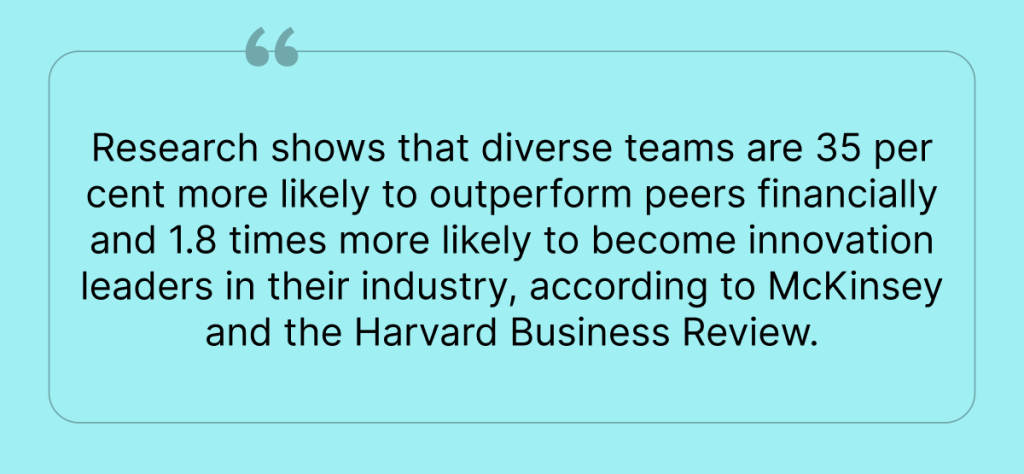
Research shows that diverse teams are 35 per cent more likely to outperform peers financially and 1.8 times more likely to become innovation leaders in their industry, according to McKinsey and the Harvard Business Review.
Call to Action
To close the gender gap, fintech companies must act with intent and structure. This includes:
- Establishing formal mentorship programmes with defined goals and outcomes
- Designing leadership development tracks for mid-career women
- Supporting ERGs with resources, visibility, and executive sponsorship
- Creating transparent career progression pathways
- Embedding inclusion into hiring, training, and promotion processes
Institutionalising these strategies not only supports women but also strengthens the talent pipeline in a fast-evolving sector.

Encouraging Women to Own Their Growth
Organisational support is essential, yet women professionals must also take ownership of their career journeys. This can involve:
- Seeking mentors and learning from peers both within and outside the organisation
- Volunteering for challenging projects that enhance skills and visibility
- Participating in learning forums, hackathons, and fintech communities
- Engaging with ERGs as networks for empowerment
- Setting clear career goals and proactively discussing development with managers
The fintech revolution in India presents a unique opportunity for women to shape not only their careers but also the future of finance and technology.
The road to equitable representation in fintech leadership is still in progress. However, with consistent mentorship, targeted leadership development, and empowered community networks, the sector can unlock stronger innovation, more resilient teams, and sustainable growth in the years ahead.
Fintech companies that invest in these strategies today will drive greater diversity while building the foundations for long-term industry success.
Richa Ranjan is a seasoned HR leader with over 12 years of diverse experience across the human resources spectrum. As Director of HR at Moneyview since 2016, she has scaled the organisation from 20 to over 1,000 employees, establishing end-to-end HR processes from the ground up. Her expertise spans talent acquisition, manpower planning, compensation, HR strategy, and team development. Richa has also worked with leading names, including Microsoft, Vedantu, SAP Labs, eBay, and TaxiForSure, gaining hands-on experience in recruitment, onboarding, vendor management, and employee engagement.




👏 Congratulations on a well-articulated and timely piece! Bridging the gender gap in fintech leadership is not just a diversity goal—it’s a strategic imperative. Your emphasis on targeted development programmes, experiential learning, and bias-aware leadership cultivation is spot on. These are the kinds of interventions that truly move the needle.
Thank you for shedding light on what it takes to build a strong, sustainable pipeline of women leaders in India. Looking forward to seeing more thought leadership from you in this space!